ARE YOU STORM READY?
$2500 OFF Generators & $100 OFF Surge Protectors

Is My Lighting System ‘Dark Sky’ Compliant?



In recent years, the way we illuminate our homes and landscapes has come under new scrutiny. As cities and suburban neighborhoods grow, the collective glow from outdoor fixtures has begun to wash out the stars and disrupt the natural rhythms of the local environment. This has led many homeowners to ask whether their outdoor lighting is Dark Sky-compliant. Being Dark Sky compliant means using light responsibly, efficiently, and respectfully toward both your neighbors and the natural world. It is a shift away from the “more is better” approach to lighting and toward a more intentional, artistic design.
In this blog, The Perfect Light will define what it means to be Dark Sky-compliant and help you determine whether your current outdoor lighting system meets these growing environmental standards. Understanding these principles allows you to enhance your property’s beauty without contributing to light pollution.
What Exactly is the Dark Sky Movement?
The Dark Sky movement is a global effort to reduce light pollution and preserve the natural nighttime environment. Led primarily by DarkSky International (formerly the International Dark-Sky Association), this initiative focuses on the fact that excessive and poorly directed artificial light has significant consequences. When light is not managed correctly, it creates “skyglow,” that hazy orange dome seen over cities that prevents us from seeing the Milky Way.
The movement is built on several key concerns:
- Ecological Impact: Many nocturnal animals depend on darkness for hunting, mating, and navigation. Excessive light can disorient migrating birds and disrupt the life cycles of local insects and amphibians.
- Human Health: Research suggests that prolonged exposure to artificial light at night can disrupt circadian rhythms and melatonin production.
- Energy Waste: Light that shines upward or into unoccupied spaces is essentially wasted energy. By directing light only where it is needed, homeowners can significantly reduce their carbon footprint.
- Safety and Visibility: Contrary to popular belief, more light does not always mean more safety. Intense, unshielded lights create deep shadows and “veiling glare” that can actually make it harder for the human eye to see potential hazards.
By adopting Dark Sky principles, you are participating in a larger effort to reclaim the beauty of the night sky while making your local community a more sustainable place to live.
The Three Pillars of Dark Sky Compliance
To determine whether your lighting is compliant, you have to look beyond the fixture’s style and examine how the light actually behaves. Dark Sky standards are generally built on three technical pillars. If your system aligns with these three categories, you are likely meeting the most important requirements for responsible outdoor lighting.
- Shielding and Direction: These are perhaps the most critical factors. Compliant fixtures are “fully shielded,” meaning the light source is tucked away so that no light is emitted at angles above 90 degrees. The light should be directed downward toward the ground or the specific feature you are illuminating, rather than out into the street or up into the atmosphere.
- Color Temperature: The color of your light is measured in Kelvins (K). High Kelvin lights (4000K to 5000K) appear blue or bright white and are known to be the most disruptive to wildlife and human sleep cycles. Dark Sky compliance typically requires a “warm” color temperature of 3000K or lower. These warmer tones mimic the natural glow of a flame and are much softer on the eyes.
- Light Intensity and Duration: Compliance also involves using the right amount of light for the task. Instead of using a high-wattage floodlight to illuminate a path, a compliant system uses lower lumen bulbs that provide just enough visibility for safety. Furthermore, using timers or motion sensors ensures that lights are only active when needed, rather than burning all night.
By focusing on these three pillars, you can create a lighting design that provides safety and elegance without contributing to the “glare” that characterizes poorly designed systems.
How to Identify Non-Compliant Fixtures
Walking your property at night is the easiest way to tell if your current setup is contributing to light pollution. You do not need technical equipment to spot the “offenders” in your landscape. Often, the fixtures that are the most visually distracting are the ones that fail to meet Dark Sky standards.
- Visible Bulbs and Glare: If you can see the glowing filament or the bright surface of a bulb from the street or a neighbor’s yard, the fixture is likely non-compliant. This creates “glare,” which actually constricts the human pupil, making it harder to see into surrounding shadows.
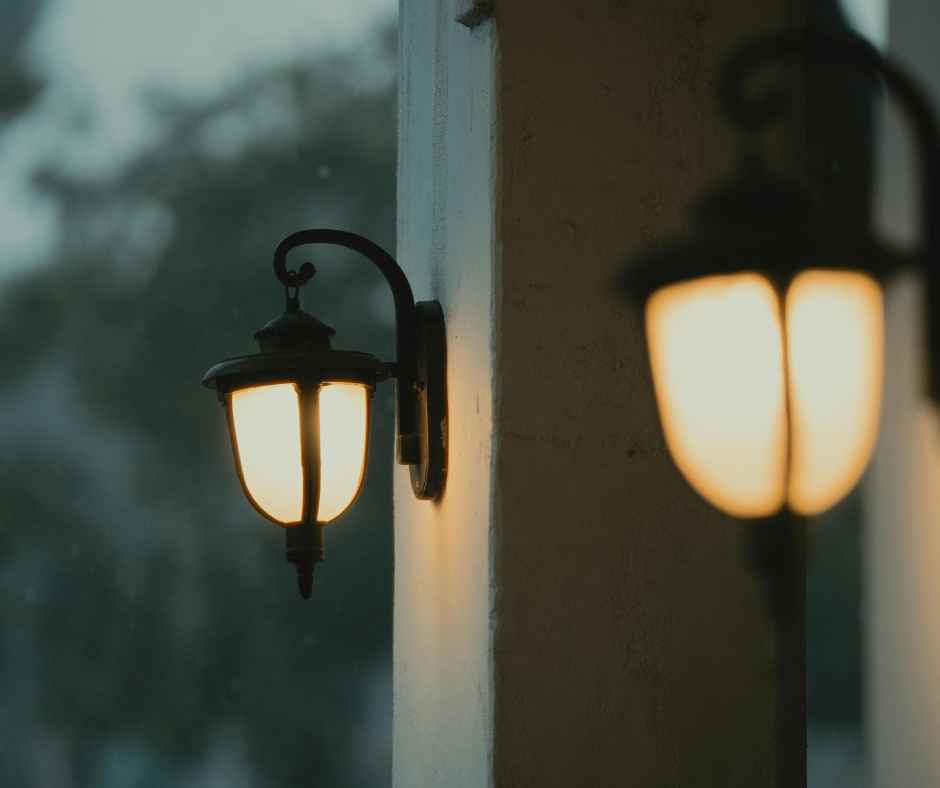
- Unshielded “Globes” or Lanterns: Many traditional decorative fixtures feature clear glass panels that allow light to escape in every direction. While these can look charming during the day, they are significant sources of light trespass at night because they scatter light upward and horizontally.
- Upward-Aiming Spotlights: If you have spotlights at the base of trees or architectural features that are aimed toward the sky without a “top hat” or shroud, you are sending light directly into the atmosphere. This is a primary contributor to neighborhood skyglow.
- Overly Bright “Security” Lights: Standard motion-activated floodlights are often the worst culprits. If your security light illuminates your neighbor’s bedroom window or the entire street, it is causing “light trespass.” Compliant security lighting uses shields to keep the beam contained strictly within your property lines.
Identifying these issues is the first step toward a more responsible design. Often, a non-compliant system can be significantly improved just by adding shrouds to existing fixtures or swapping out high-intensity cool bulbs for warmer, lower-lumen versions.
The Benefits of Transitioning to a Compliant System
Transitioning to a Dark Sky-compliant lighting system is about much more than just following environmental guidelines. It is an investment in your home’s overall quality and atmosphere. When you move away from harsh, unshielded lighting, you unlock several benefits that improve your property and your lifestyle.
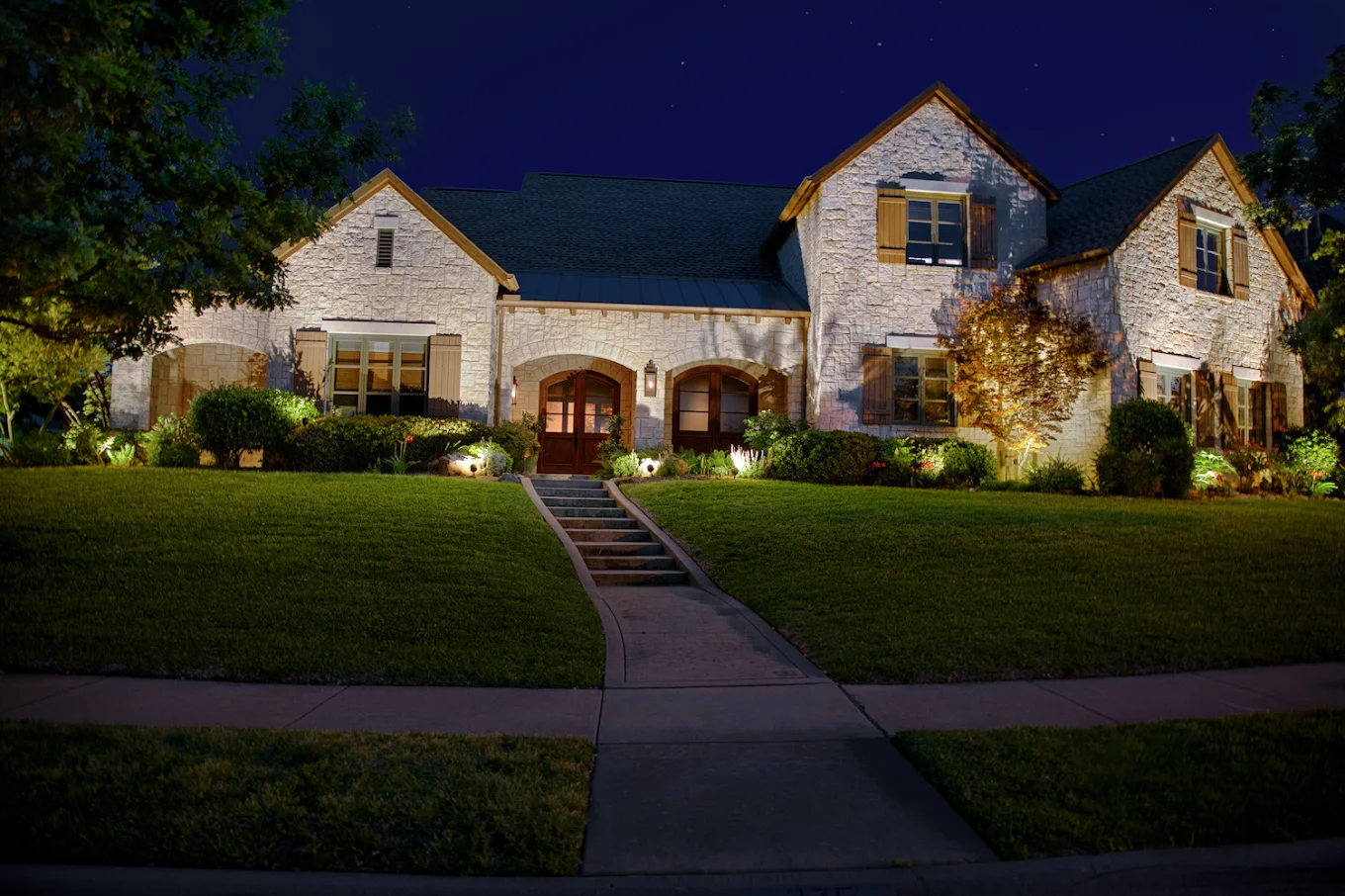
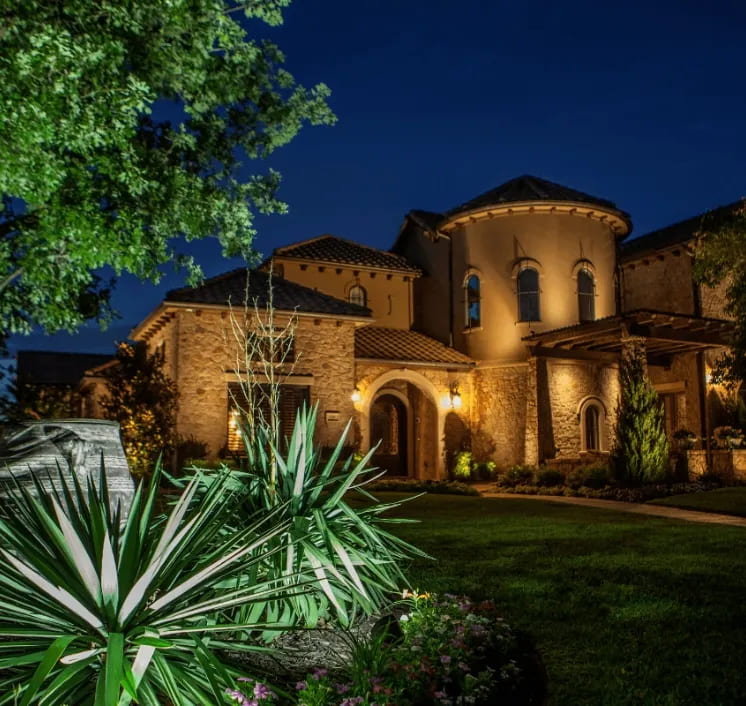
- Superior Curb Appeal: Dark Sky lighting relies on the play between light and shadow. By using shielded fixtures that hide the light source, you create a sophisticated “moonlight” effect. The focus remains on your beautiful architecture and landscaping rather than on a distracting, bright bulb.
- Reduced Glare and Improved Vision: Because your eyes are not being “blinded” by unshielded light sources, your pupils remain dilated. This allows you to see more clearly into the darker areas of your yard, which actually improves your home’s security and your own ability to navigate the property safely.
- Lower Energy Costs: Compliant systems use light precisely where it is needed. By using lower-wattage LED bulbs and directing the output downward, you waste far less electricity. Over time, this leads to a noticeable reduction in your monthly utility bills.
- Neighborhood Harmony: Light trespass is a common source of tension between neighbors. By keeping your light on your property and out of their windows, you help create a more peaceful, respectful neighborhood.
A compliant system proves that you do not have to sacrifice a stunning visual presentation to be a responsible steward of the night. In many cases, the most beautiful properties in a neighborhood are those that use light most sparingly and strategically.
Local Regulations and Homeowners Associations
As the Dark Sky movement gains momentum, it is moving from a voluntary environmental choice to a legal requirement in many communities. Across the country, at least 19 states and hundreds of local municipalities have adopted official lighting ordinances. These laws are designed to protect the character of rural areas, support astronomical research, and reduce energy waste on a civic scale.
For homeowners, this means your choice of outdoor lighting is increasingly governed by factors beyond personal taste.
- Evolving Municipal Codes: Many cities now require all new construction to feature fully shielded, downward-directed lighting. Some ordinances even have a “sunset clause” that requires existing homes to be retrofitted with compliant fixtures over a specific period of years.
- HOA Architectural Standards: Homeowners Associations (HOAs) are often the first to adopt Dark Sky standards to maintain a consistent neighborhood aesthetic. They may specify the maximum allowable lumens for your front entry or require a specific color temperature to prevent your home from looking like a commercial parking lot.
- Nuisance and Trespass Laws: Even in areas without specific Dark Sky laws, “light trespass” can be legally classified as a nuisance. If your unshielded floodlight shines directly into a neighbor’s bedroom, you could be required to remove or shield the fixture to comply with local quiet enjoyment standards.
- Property Value Considerations: Communities that preserve the night sky often see a positive impact on property values. A well-designed, compliant lighting scheme suggests a high level of care and attention to detail, which appeals to modern, eco-conscious buyers.
Staying ahead of these regulations not only prevents potential fines but also ensures that your home remains a welcome part of the community. By choosing a system that respects these local standards, you are future-proofing your property against upcoming changes in environmental legislation.
Professional Design: Achieving Compliance Without Sacrificing Beauty
A common concern among homeowners is that following Dark Sky standards will result in a yard that feels under-lit or lacks dramatic flair. However, at The Perfect Light, we believe that responsible lighting and luxury design go hand in hand. In many ways, the restrictions of Dark Sky compliance actually lead to a more beautiful, professional result because they push away from generic, flat lighting toward a more layered, intentional approach.
Our designers use several professional techniques to achieve this balance:
- The Moonlighting Effect: Instead of using powerful spotlights on the ground aimed upward, we often place shielded fixtures high in the canopy of trees. This casts a soft, filtered light downward through the branches, creating a natural moonlit glow on your lawn and driveway without any upward light spill.
- Architectural Grazing with Shrouds: We can still highlight the beautiful textures of your stone or brickwork by using fixtures equipped with precise shrouds. These “eyelids” ensure that light is directed strictly along the wall’s surface rather than bleeding out into the neighborhood or the sky.
- Precision Path Lighting: Rather than using glass “globe” lights that shine in all directions, we utilize elegant, solid-top path lights. These fixtures act as miniature umbrellas, focusing every lumen of light onto the ground where it is needed for safety while keeping the light source completely hidden from view.
- Low-Voltage LED Technology: Modern LED systems enable us to fine-tune the brightness of each bulb. We select the lowest possible wattage that still provides the desired effect, ensuring your home is elegantly highlighted without feeling overpowered.
Professional design is about the art of what you do not see. By hiding the light sources and focusing on the effect rather than the bulb, we can create a stunning nighttime environment that honors the beauty of the stars above.
The Future of the Night Sky
Dark Sky compliance is more than a set of technical rules; it is a philosophy of lighting that respects the natural world while enhancing our own living environments. As we continue to understand the impact of light pollution on our health, our ecosystems, and our connection to the universe, the shift toward responsible outdoor lighting becomes increasingly essential. By choosing shielded, warm-toned fixtures and appropriately dimming them, you can create a nighttime sanctuary that is both beautiful and ethical. You do not have to choose between a stunningly lit home and a clear view of the stars.
The true goal of a well-designed lighting system is to reveal beauty, not to create glare. By focusing on the quality of light rather than the quantity, you can ensure your property remains a source of pride for your family and a respectful addition to your community. Contact us today at The Perfect Light to schedule a consultation and ensure your outdoor lighting system is both breathtaking and Dark Sky compliant.
Frequently Asked Questions
Does Dark Sky compliance mean my yard will be too dark for safety?
No, a compliant system is often safer than a traditional one. By eliminating glare and deep shadows, Dark Sky lighting helps your eyes adjust more easily to the dark. This improved visibility makes it easier to spot potential hazards or intruders that might be hidden by the “blinding” effect of unshielded lights.
Can I make my current lighting compliant without replacing every fixture?
In many cases, yes. You can often add shrouds or “top hats” to existing fixtures to direct the light downward. Swapping out bright, cool-white bulbs for warmer (3000K or lower) LED bulbs with a lower lumen output is another cost-effective way to move toward compliance.
Are there specific bulbs I should look for to be compliant?
Look for bulbs labeled as “Warm White” or “Soft White” with a color temperature of 2700K to 3000K. Many manufacturers now also offer “Dark Sky Friendly” certifications on their packaging, indicating that the bulb’s intensity and color are optimized for nighttime conservation.
How does Dark Sky lighting affect my energy bill?
Dark Sky-compliant systems are significantly more efficient. Because you are only directing light where it is needed and using lower-intensity bulbs, you use far less electricity. When combined with modern LED technology and smart timers, these systems can reduce outdoor lighting energy consumption by 50 percent or more.
Does the International Dark-Sky Association certify residential lighting?
While the IDA (now DarkSky International) primarily certifies specific lighting fixtures through its Fixture Seal of Approval program, it does not certify individual homes. However, by using IDA-approved fixtures and following their five principles for responsible outdoor lighting, you can confidently state that your system is compliant with their standards.


Light up your nights