ARE YOU STORM READY?
$2500 OFF Generators & $100 OFF Surge Protectors

How Outdoor Lighting Increases Home Safety in Texas Neighborhoods



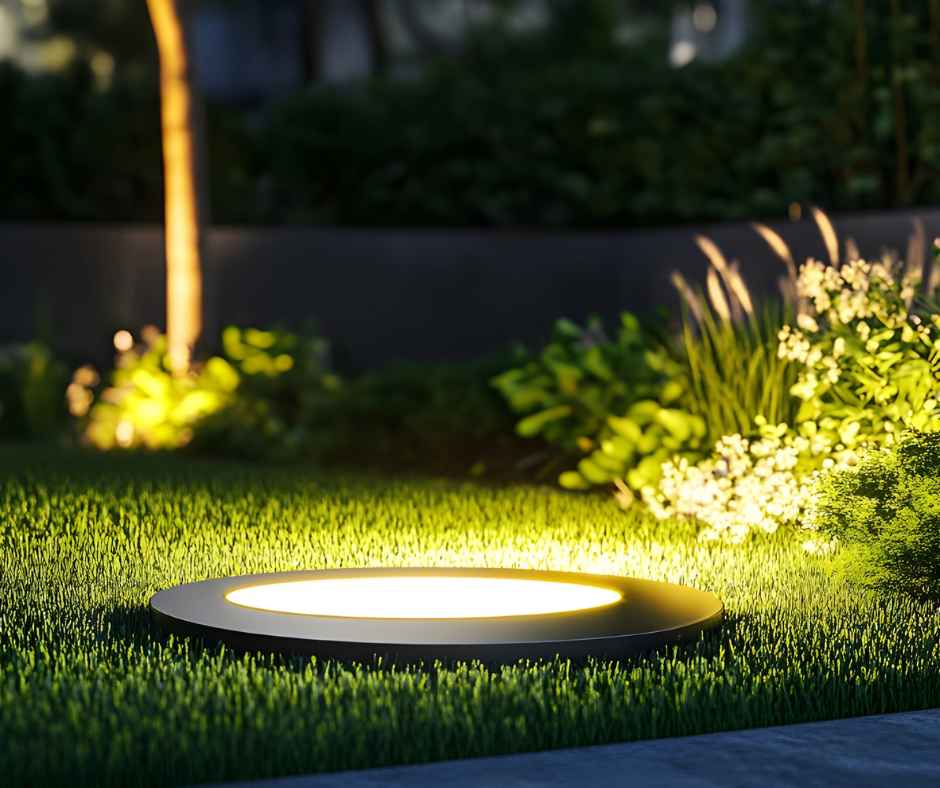
In many Texas neighborhoods, the sprawling landscapes and large residential lots that we love can also create significant security vulnerabilities once the sun goes down. A dark property is more than just a missed aesthetic opportunity; it is an open invitation for intruders and a potential hazard for guests and residents alike.
At The Perfect Light, we understand that true security comes from a balance of visibility and beauty. In this blog, we will explore how professionally designed outdoor lighting serves as a powerful deterrent against crime and a critical safety feature for your family. By strategically illuminating your home’s exterior, you can eliminate the shadows where trouble hides while also highlighting your property’s architectural features.
The Psychology of a Well-Lit Property: Deterring Intruders
Criminals and opportunistic intruders generally prefer to operate under the cover of darkness where they can remain unobserved. A property shrouded in shadows offers anonymity, encouraging illicit activity. By contrast, a well-illuminated Texas home signals to any potential intruder that the property is actively monitored and that any movement will be immediately visible to neighbors or passing patrols. This concept is a core tenet of Crime Prevention Through Environmental Design (CPTED), which suggests that the physical environment can be manipulated to reduce the fear and incidence of crime.
When a home features professional landscape lighting, it eliminates the “dark pockets” that intruders use for concealment. This increased visibility creates a psychological barrier, as the risk of being identified or captured on a security camera is significantly higher. To maximize the deterrent effect of your lighting system, consider these psychological and practical factors:
- Continuous Illumination: Maintaining a low-level “glow” throughout the night rather than relying solely on sudden motion lights, which can be easily circumvented.
- Eliminating Blind Spots: Identifying and lighting the areas behind large Texas shrubs or around side gates where a person could hide from street view.
- Highlighting Entry Points: Using bright, clear light around windows and doors to make any attempt at forced entry highly visible to the public.
- Simulating Occupancy: Using automated timers and smart controls to ensure the lights come on at dusk, suggesting that someone is always home and attentive.
- Enhancing Camera Clarity: Providing enough ambient light for high-definition security cameras to capture clear facial features and license plate numbers at night.
- Defining Boundaries: Using path lights to clearly mark the edge of your property, which psychologically signals a transition from public to private space.
- Neighborly Surveillance: Creating enough light for neighbors to easily spot unusual activity on your porch or in your driveway from their own windows.
A property that looks cared for and well-lit is a difficult target. By investing in professional outdoor lighting, you are not just adding beauty; you are making a clear statement that your home is a secure and vigilant environment.
Strategic Placement: Entrances, Pathways, and Blind Spots
Strategic placement is the difference between a decorative light and a security asset. In Texas, where large oak trees and expansive perimeter fencing are common, “shadow pockets” can easily form near the very areas you want to protect most. Effective outdoor lighting focuses on illuminating transition zones where an intruder might attempt to gain access or where a resident might feel most vulnerable.
By layering your light, you create a seamless field of vision that extends from the street to your front door. This eliminates the “black hole” effect that occurs when only the porch light is on. To secure the most critical areas of your Texas property, prioritize these placement strategies:
- Entry Point Illumination: Installing downward-facing lights above all exterior doors to ensure anyone standing at the threshold is fully visible to a peephole or doorbell camera.
- Gate and Fence Lighting: Placing low-voltage fixtures along the perimeter to highlight side gates, which are often the preferred entry points for trespassers.
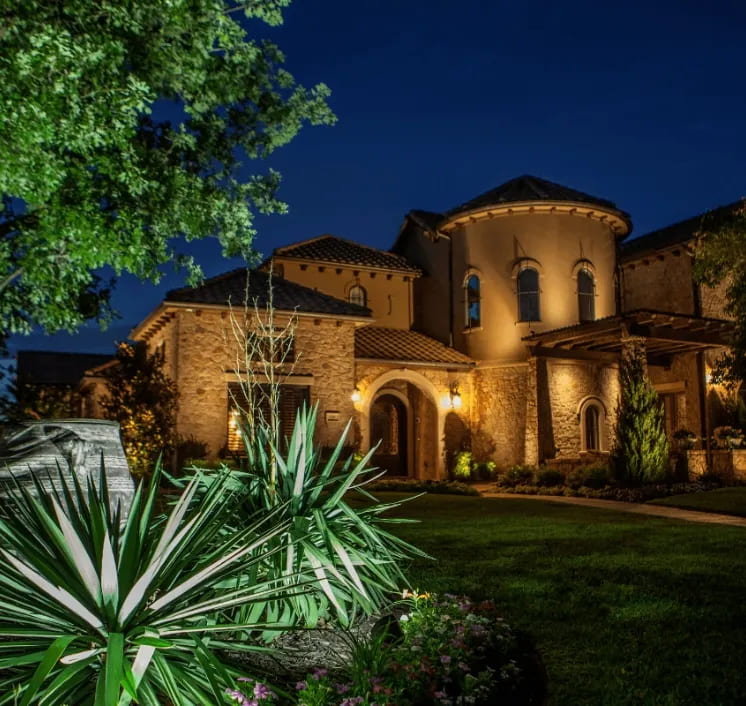
- Ground-Level Window Lighting: Using “grazing” techniques to wash the exterior walls near first-floor windows with light, making any tampering immediately obvious.
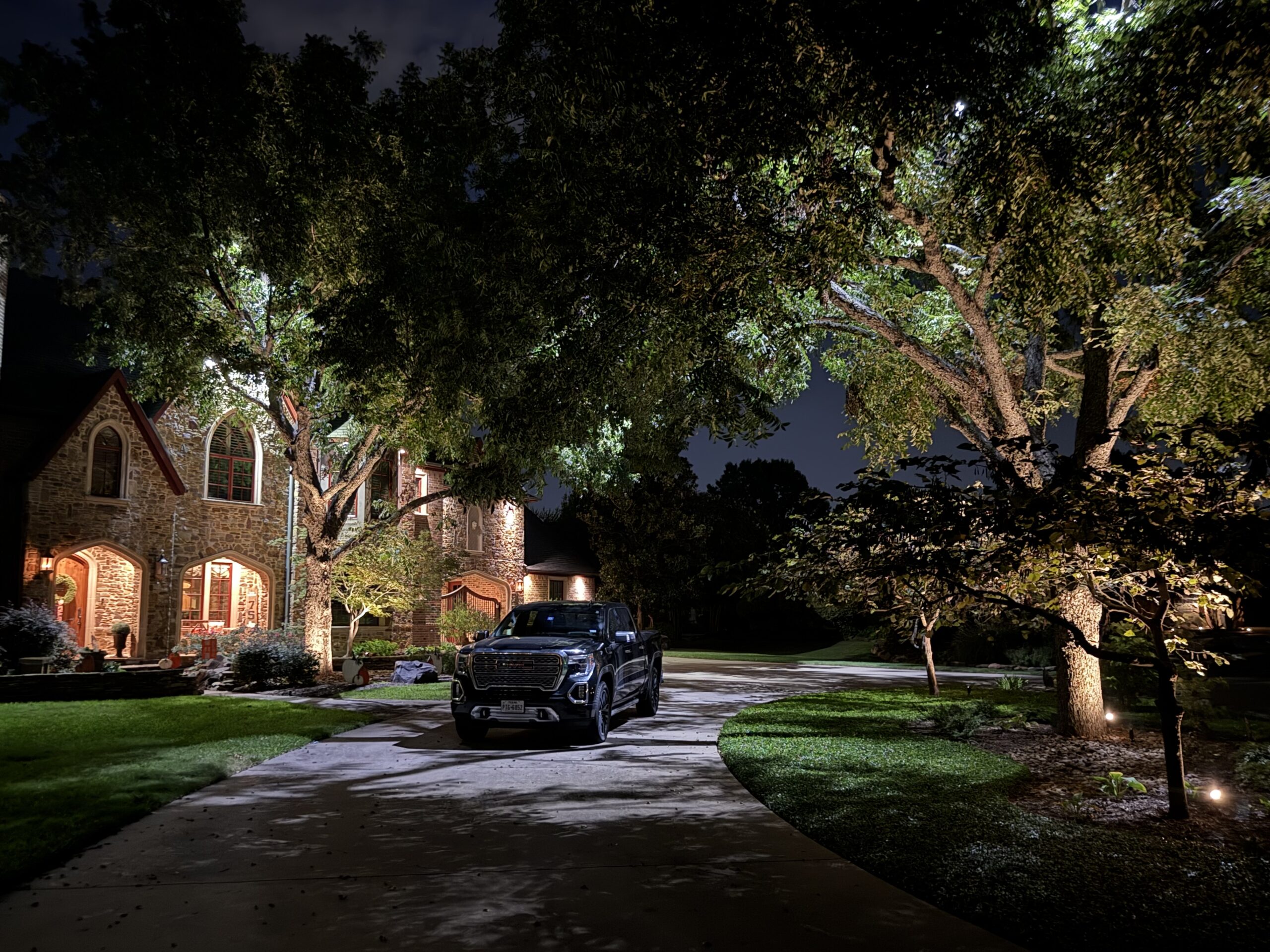
- Garage and Driveway Coverage: Ensuring the entire length of the driveway is lit to prevent vehicle break-ins and to provide safe passage from the car to the house.
- Corner Mounting: Placing fixtures at the corners of the home to eliminate shadows that wrap around the building, providing 360-degree visibility.
- Tree and Foliage Uplighting: Illuminating the canopy of large trees near the house to prevent them from being used as scaling points or hiding spots.
- Soffit Lighting: Using recessed lights in the eaves to provide a clean, consistent wash of light down the home’s facade, removing dark voids under the roofline.
When every corner of your property is visible, the “opportunity” for crime is drastically reduced. Proper placement ensures that your security measures are as effective as they are aesthetically pleasing.
Navigational Safety: Preventing Trips and Falls
While security against intruders is a primary concern, the safety of your family and guests is equally important. In Texas, we love our outdoor living spaces, but these areas often feature uneven stone paths, pool decks, and elevation changes that become treacherous after dark. A well-designed landscape lighting system provides essential “task lighting” that guides foot traffic and prevents painful injuries.
When a walkway is properly lit, the contrast between the path and the surrounding lawn is clear, reducing the risk of a misstep. In our region, where outdoor entertaining is a year-round activity, providing safe passage is a critical responsibility for any homeowner. To ensure your property is safe for navigation, consider these essential lighting applications:
- Step and Riser Illumination: Installing small, recessed lights directly into the vertical faces of outdoor stairs to clearly show the height of each step.
- Path and Walkway Markers: Placing fixtures at regular intervals along winding stone paths to define the edges and highlight potential tripping hazards like roots or loose gravel.
- Pool and Water Feature Lighting: Using submerged and perimeter lights to clearly define the edge of the water, preventing accidental falls into the pool.
- Deck and Patio Perimeter Lighting: Highlighting the boundaries of elevated wooden or composite decks to prevent guests from stepping off the edge.
- Driveway Edge Definition: Using low-profile bollard lights to help drivers see the transition from the pavement to the grass or flower beds.
- Entryway Threshold Lighting: Ensuring the change in floor height at the front and back doors is clearly visible to prevent stumbles when entering the home.
- Hazard Spotlighting: Focusing light on specific obstacles such as low-hanging branches, large decorative boulders, or utility boxes.
By prioritizing these navigational aids, you reduce the risk of accidents and potential liability on your property. Safe movement through your yard ensures that your outdoor spaces remain enjoyable long after the sun goes down.
Smart Technology and Automation for Constant Vigilance
As we move through 2026, the integration of smart home technology has transformed outdoor lighting from a static feature into an active security system. Modern Texas homeowners now have the ability to sync their landscape lights with motion sensors, cameras, and mobile apps for real-time control. This level of automation ensures that your home is never truly “dark,” even if you are thousands of miles away on vacation.
Smart systems allow for “zoning,” where specific areas of the yard can brighten in response to detected movement. This proactive approach to landscape lighting provides an extra layer of defense that traditional systems lack. To harness the power of modern technology for your home’s security, consider these smart features:
- Astronomical Timers: Using GPS-based controllers that automatically adjust “on” and “off” times as the sunset changes throughout the Texas seasons.
- Motion-Triggered Brightening: Programming specific zones to increase from 20% to 100% brightness when a sensor detects movement near a side gate or driveway.
- Remote Mobile Access: Turning lights on or off from a smartphone app, allowing you to light up the house before you even pull into the neighborhood.
- Integration with Security Cameras: Linking lights to trigger when a camera detects a person, ensuring the recorded footage is illuminated and clear.
- Vacation Mode Randomization: Setting the lights to turn on and off in a non-predictable pattern to mimic the natural behavior of someone being at home.
- Dimmable LED Technology: Adjusts light intensity to suit the specific security needs of different areas, such as brighter light in the alley and softer light on the patio.
- Voice Command Compatibility: Using smart assistants to instantly flood the backyard with light if you hear an unusual noise at night.
By automating your lighting, you remove the human error of forgetting to flip a switch. This constant vigilance ensures that your property is always protected by a ring of light, regardless of your schedule.
The Professional Edge in Security Lighting Design
While DIY solar lights are common, they often lack the reliability and intensity required for true security. Professional installation from The Perfect Light ensures your system uses high-quality, weather-resistant fixtures that can withstand the intense Texas heat and humidity. Our designers understand the technical side of illumination, such as beam spreads and color temperatures, which are vital for eliminating shadows without blinding your neighbors.
A professional outdoor lighting audit looks at your property through the lens of both an artist and a security expert. Choosing a professional design offers several long-term advantages:
- Hardwired Reliability: Ensuring your security lights don’t fail during a string of cloudy days or after a heavy North Texas thunderstorm.
- Optimal Beam Angles: Placing fixtures so they illuminate the target area without creating “hot spots” or glare that can actually hide an intruder from view.
- Lifetime Durability: Using brass and copper fixtures that won’t corrode or break, ensuring your security investment lasts for decades.
Secure Your Texas Property with Expert Illumination
Investing in professional outdoor lighting is one of the smartest ways to protect your home and family. By eliminating shadows, highlighting hazards, and integrating smart technology, you create a property that is both beautiful and formidable.
The Perfect Light is dedicated to helping Texas homeowners achieve peace of mind through expert design and installation. To see how we can transform your home’s safety and curb appeal, contact us today for a professional lighting consultation.
FAQ: Texas Outdoor Lighting and Safety
Do outdoor lights really stop burglars?
Yes. Statistics show that well-lit homes are significantly less likely to be targeted by burglars because the risk of being seen or caught on camera is much higher than in dark properties.
What is the best color temperature for security lighting?
For security, a “cool white” or “natural white” (around 3000K to 4000K) is often preferred because it provides better contrast and clarity for the human eye and security cameras.
Will my outdoor lights bother my neighbors?
Not with a professional design. We use “shielded” fixtures and precise aiming to ensure the light stays on your property and does not spill into your neighbor’s windows.
How much energy does a professional LED lighting system use?
Modern LED systems are incredibly efficient. A typical whole-home landscape lighting system often uses less energy than a single traditional 100-watt light bulb.
Can I add motion sensors to my existing landscape lights?
In many cases, yes. We can often integrate smart controllers or external sensors into high-quality low-voltage systems to provide motion-activated features.


Light up your nights