ARE YOU STORM READY?
$2500 OFF Generators & $100 OFF Surge Protectors

What a Panel Upgrade Involves: From First Call to Final Inspection



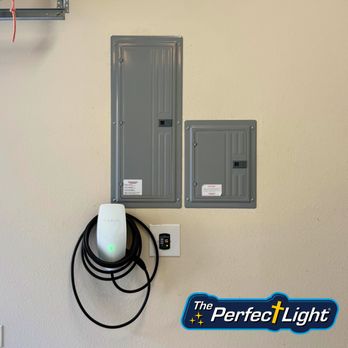
TL;DR
A residential electrical panel upgrade in Houston typically takes one full day, requires a permit in Harris County, and follows a clear 7-step process from initial assessment through municipal inspection. The Perfect Light handles every step, including permit filing and inspection coordination.
Maybe it’s the addition that got wired into a panel already sized for a smaller house. Maybe it’s the EV charger your neighbor just installed, which your current setup can’t support without an upgrade first. Or maybe there’s nothing dramatic triggering it, just an older Houston home, a panel that’s been in place since the 1970s, and a vague sense that something should probably be looked at.
Whatever brought you here, the most common thing we hear from homeowners before a panel conversation is that they had no idea what the process involved. That uncertainty is exactly why people put these calls off. This post is designed to remove it.
First: Do You Need An Upgrade?
A panel upgrade is a meaningful investment. If your current panel is functioning and you don’t have plans that would change your home’s load requirements, you may not need one right now.
Many of the homes that prompt these conversations are in neighborhoods like Spring Branch, Memorial, Bellaire, and Meyerland, where electrical systems were often designed decades before modern appliances, EV chargers, and whole-home backup systems became common. Age alone doesn’t mean a panel needs to be replaced, but it does make an assessment worthwhile.
In Houston homes built before 1990, electricians frequently encounter Federal Pacific, Zinsco, and older Pushmatic panels. Not every older panel requires replacement, but these brands are commonly evaluated because of age, parts availability, or documented reliability concerns.
These are the situations that warrant an assessment:
- Breakers trip regularly under normal load. Running a dishwasher and microwave at the same time shouldn’t trip a modern panel.
- Your panel is 40 or more years old. Older panels often use components that are no longer code-compliant or have documented reliability issues.
- You’re planning a significant addition. EV charger, whole-home generator, central AC in a previously window-unit home: all require a panel assessment first.
- You have a fuse box rather than circuit breakers. Fuse boxes are no longer code-compliant in most Texas jurisdictions.
- A licensed electrician has already told you the panel is undersized or failing.
For more on issues specific to Houston homes from the 1960s through 1980s, see: Electrical issues common in older Houston homes
Step-By-Step: What The Process Looks Like
A panel upgrade follows a predictable seven-step sequence. Knowing those steps before you make the call removes the uncertainty that causes most homeowners to delay. Here’s exactly what The Perfect Light’s process looks like, start to finish.
Step 1: Initial call and triage
When you contact The Perfect Light, the first conversation is diagnostic. A service coordinator or electrician will ask about your current panel capacity, what prompted the call, and what load you’re trying to support.
Step 2: The assessment visit
A licensed electrician (not a sales representative) visits your home and evaluates the current panel, service entrance, and load requirements. Expect 30 to 60 minutes.
Step 3: The quote and scope of work
You receive a written quote covering the panel, labor, permits, and any incidental work identified. The scope is fixed before any work begins.
Step 4: Permit filing
In Harris County and most Texas jurisdictions, a panel upgrade requires a permit. The Perfect Light files it. You don’t manage that process.
Step 5: Installation day
Panel upgrades typically take one full working day. Power will be off for four to six hours. The crew removes the old panel, installs the new one, reconnects and labels every circuit, and tests the system before leaving.
Step 6: The inspection
A municipal inspector verifies the work meets code. The Perfect Light coordinates the inspection schedule.
Step 7: Close-out and documentation
Once the inspection passes, you receive documentation of the completed work. Your electrician walks you through what was done and how the new panel is organized.
What This Costs, And Why The Range Is Wide
Panel upgrade costs in the Houston area vary based on five factors. Understanding each one is the best way to interpret any quote you receive.
- Panel amperage. Most modern homes need 200-amp service. Upgrading from 100A means paying to increase capacity, not just replace hardware.
- Service entrance condition. Old or undersized wiring from the utility to the panel may need upgrading alongside it, which is common in older Houston homes.
- Permit and inspection fees. Harris County, Fort Bend County, and Montgomery County all have different fee schedules.
- Incidental findings. Grounding problems, bonding gaps, or improperly added circuits occasionally surface during assessment.
- Labor complexity. Older homes with original, undocumented wiring take longer to work through.
The biggest driver of panel upgrade cost is often not the panel itself. It’s whether the home’s service entrance, grounding system, or existing wiring also needs to be brought up to current standards. Two homes receiving the same panel upgrade can have very different costs depending on the condition of the surrounding electrical infrastructure.
A 100A-to-200A upgrade in a post-1990 home with an accessible service entrance is a different job than the same amperage upgrade in a 1960s home with original wiring and a compromised service entrance. The best path to an accurate number is an in-home assessment. Ballpark estimates that don’t account for your specific home are frequently wrong.
How To Choose The Right Electrician For This Job
Most of the risk in a panel upgrade comes from cutting one of four corners. Here’s what to verify before signing anything.
- Verify their TDLR license at tdlr.texas.gov. Any electrician who declines to provide a license number is a stop sign. Texas requires all electricians to be licensed through the Texas Department of Licensing and Regulation, and any licensed electrician can give you their number on the spot.
- Ask whether they pull permits. An unpermitted panel upgrade creates liability for the homeowner and may affect insurance and resale. If the work is ever flagged during a home sale or insurance claim, the homeowner absorbs the consequence, not the electrician.
- Get a written scope before work begins. A verbal quote and scope creep go together. A written scope locks in what’s included, what’s not, and what happens if the assessment reveals additional work.
- Ask who will perform the installation and who remains accountable for the work. Understanding who will be on-site, and who will be responsible if questions arise later, is just as important as understanding the price. At The Perfect Light, Jake Burton’s team performs the installation, and the person who gives you the quote is accountable for the outcome.
If you’ve been putting off a panel assessment, this is the moment to move it off the list.
Frequently Asked Questions
What are signs my electrical panel needs to be replaced?
Five signs: breakers trip regularly under normal load; the panel is 40 or more years old; you have a fuse box; you’re planning a major load addition; or a licensed electrician has already flagged it. Any one warrants a professional visit.
How long does a panel upgrade take?
One full working day. Power off for four to six hours. Inspection is scheduled separately and coordinated by The Perfect Light.
Can I stay in my house during a panel upgrade?
Yes. Most homeowners remain in the home during the work. Power is typically unavailable for four to six hours while the old panel is removed and the new panel is installed and tested.
Do I need a permit for a panel upgrade in Houston?
Yes. Required in Harris County and most Texas jurisdictions. The Perfect Light files the permit and coordinates the inspection. An unpermitted panel upgrade creates liability and may affect insurance and resale.
How much does a panel upgrade cost in Houston?
Cost depends on amperage upgrade required, service entrance condition, permit fees by municipality, and incidental findings. The most accurate path to a number is an in-home assessment. Ballpark estimates that don’t account for your specific home are frequently wrong.
What should I ask an electrician before hiring them for a panel upgrade?
Verify their TDLR license at tdlr.texas.gov. Ask whether they pull permits. Get a written scope of work before anything begins. Ask who will perform the installation.
Does The Perfect Light do electrical panel upgrades?
Yes. Jake Burton, Master Electrician, leads The Perfect Light’s residential electrical team in Houston. The process includes assessment, written quote, permit filing, installation, inspection coordination, and documented close-out.



Light up your nights