ARE YOU STORM READY?
$2500 OFF Generators & $100 OFF Surge Protectors

What to Expect During a Professional Electrical Safety Inspection



TL;DR
A professional electrical safety inspection should evaluate your home’s electrical panel, wiring, grounding, and key safety protections while ending with a clear explanation of the findings and a written summary, not a high-pressure sales pitch.
Most homeowners don’t think about an electrical safety inspection until they’re buying an older home, planning a renovation, or noticing something that doesn’t seem quite right. But one of the biggest benefits of an inspection is identifying potential issues before they become expensive, or unsafe, problems.
What an inspection includes can vary quite a bit depending on who you hire. Knowing what a thorough inspection should cover helps you understand whether you’re getting a comprehensive evaluation or simply a quick walkthrough.
For many homeowners, an electrical safety inspection is their first experience working with a licensed electrician before anything has actually failed. At The Perfect Light, inspections are designed to help homeowners understand the condition of their electrical system, identify potential safety concerns, and make informed decisions before small issues become larger ones.
A thorough inspection isn’t about looking for reasons to recommend expensive repairs. It’s about giving you a clear picture of how your home’s electrical system is performing today.
What usually prompts homeowners to schedule an inspection
Homeowners schedule electrical safety inspections for a variety of reasons. Some are buying an older home, others have noticed warning signs like flickering lights or warm outlets, and many are preparing for a renovation or a new electrical addition such as an EV charger or landscape lighting system. Some simply want to understand the condition of a home that hasn’t been inspected in years. None of these situations require something to already be broken. In fact, an inspection is often most valuable before a problem appears.
Changes in how you use your home can also be a good reason to schedule an inspection, even if everything appears to be working normally. Setting up a home office, preparing a nursery, finishing a garage, or adding new appliances all place different demands on your home’s electrical system. An inspection can help confirm that your wiring, outlets, and panel are ready to safely support those changes before they become part of your everyday routine.
The goal is not to assume something is wrong. It’s to understand the condition of your home’s electrical system before small concerns turn into larger repairs.
Reviewing the electrical panel first
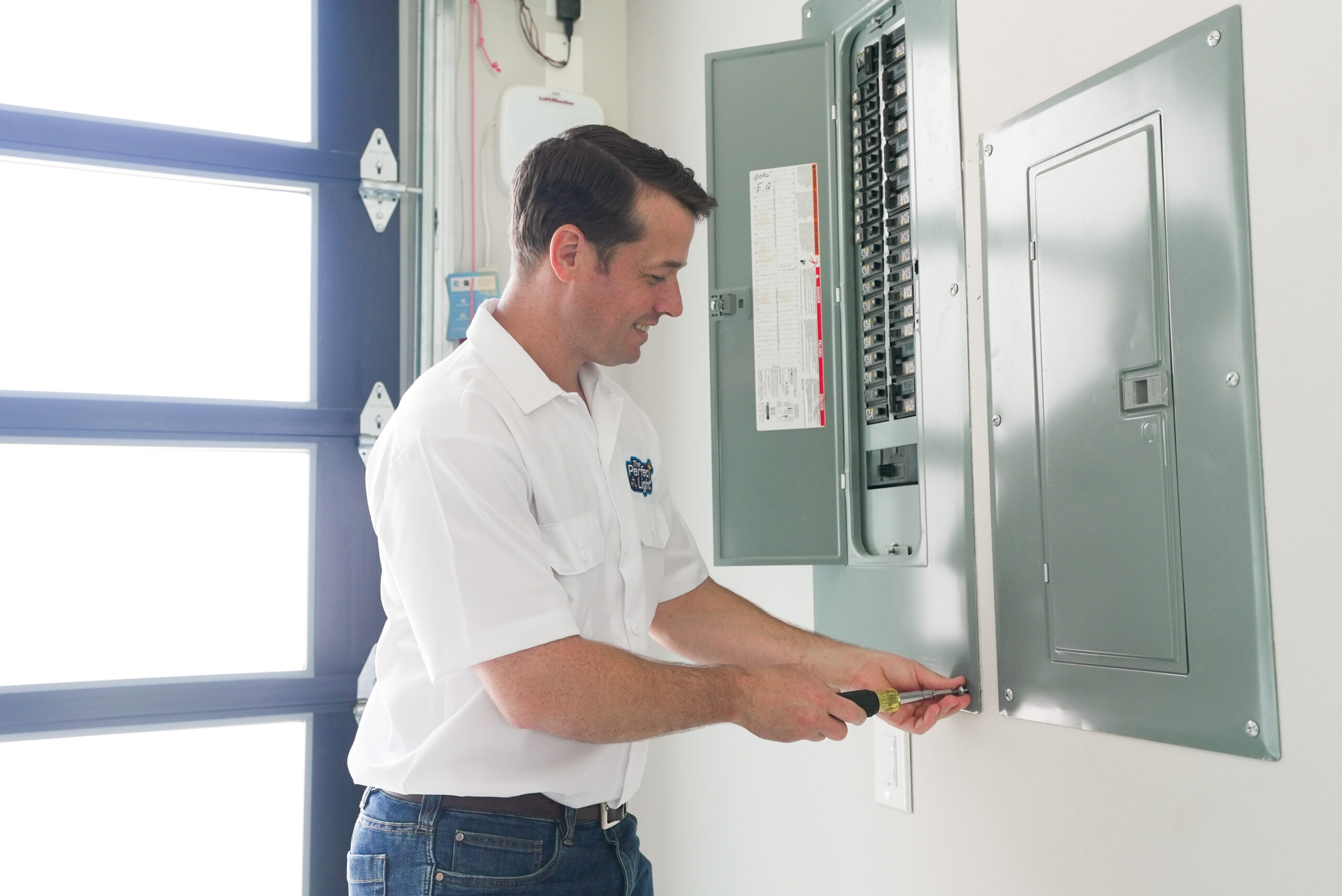
Every electrical safety inspection at The Perfect Light begins at the electrical panel because it serves as the control center for your home’s electrical system. Your electrician will evaluate the panel’s age and rated capacity, which is commonly 100, 150, or 200 amps in residential homes, while also looking for signs of wear such as rust, heat damage, or outdated breaker types. They’ll also evaluate how much of the panel’s available capacity is already being used, since that determines whether your home can safely support future additions like an EV charger or a new landscape lighting circuit.
Your electrician will also check that the panel’s circuit labels are accurate and up to date. Clearly labeled breakers make future maintenance easier and help you quickly identify the correct circuit if power ever needs to be shut off in an emergency.
The electrical panel often provides the clearest overall picture of your home’s electrical system, which is why it serves as the starting point for the rest of the inspection.
Checking wiring and grounding throughout the home
After evaluating the electrical panel, your electrician will inspect accessible wiring and the home’s grounding system. The goal is to identify visible signs of wear, deterioration, or conditions that could affect safety. In older homes, this may include looking for aluminum branch wiring, aging cloth-insulated wiring, or other electrical systems that deserve a closer look, even if nothing appears to be wrong at first glance.
Because much of a home’s wiring is hidden behind finished walls and ceilings, a visual inspection has its limits. Instead of opening walls, your electrician uses testing at accessible outlets, switches, and other connection points to evaluate how the electrical system is performing. If those tests indicate a larger issue, they’ll explain the findings and discuss what additional evaluation or repairs, if any, may be recommended. A complete wiring replacement is a separate project and is not part of a standard safety inspection.
The purpose of this part of the inspection is to identify potential concerns without performing unnecessary or invasive work.
Confirming code compliance items
Your electrician will also verify that important safety protections are in place throughout the home. This includes ground-fault circuit interrupter (GFCI) protection in areas exposed to moisture, such as kitchens, bathrooms, garages, and outdoor outlets, as well as arc-fault circuit interrupter (AFCI) protection in many living areas. These devices are designed to detect electrical hazards that standard breakers may not, making them an important part of a home’s overall electrical safety. Homes that are missing these protections are among the more common findings during an inspection.
Older homes are more likely to be missing these protections simply because today’s requirements either didn’t exist or were much more limited when the home was built. That doesn’t necessarily mean the original electrical work was done incorrectly. It reflects how electrical safety standards have evolved over time.
If any of these safety features are missing, your electrician should explain what they do, why they’re recommended, and whether upgrading them makes sense for your home.
What you should receive when it is finished
A thorough electrical safety inspection should end with a clear explanation of the findings in plain language, not simply a pass or fail. You should receive a written summary that clearly separates urgent safety concerns from lower-priority recommendations, along with an estimate for any repairs or upgrades that may be recommended. Most importantly, you should have the opportunity to ask questions and understand exactly what was found before deciding whether to move forward with any work.
It’s also worth asking how the inspection summary will be delivered and keeping a copy for your records. It can be helpful if you’re planning to sell your home, documenting past electrical work, or discussing your electrical system with your insurance company in the future. If any issues are found, ask whether the summary includes photos or specific measurements, since that level of detail can make it easier to get a second opinion or track changes over time.
When the inspection is complete, you should leave with a clear understanding of your home’s electrical system, not a list of unanswered questions.
Why the details of an inspection are worth understanding before you book one
Not every electrical safety inspection is the same, even when two companies charge a similar price. Understanding what a thorough inspection should include, from the electrical panel and wiring to grounding and key safety protections, helps you recognize the difference between a comprehensive evaluation and a quick walkthrough. It also gives you the confidence to ask informed questions if something in the inspection summary isn’t clear.
At The Perfect Light, electricians take the time to walk homeowners through the inspection findings instead of simply handing over a technical report. The goal is to make sure you understand the condition of your electrical system, any safety concerns that were identified, and what your options are moving forward. That same approach applies whether the inspection is a standalone service or part of a larger project, such as preparing your home for a new landscape lighting system.
A good electrical safety inspection shouldn’t leave you feeling overwhelmed. It should leave you with a clearer understanding of your home and confidence in what comes next.
Ready to understand the condition of your home’s electrical system?
Frequently asked questions
How often should a home get an electrical safety inspection?
There isn’t a single schedule that fits every home, but an inspection is a good idea when buying an older home, periodically for homes that are several decades old, or before adding a major electrical load such as an EV charger or a landscape lighting system.
Does an inspection always find a problem?
No. Many inspections identify little or nothing that requires immediate attention, especially in newer homes or homes that have been updated over time. The value of an inspection is understanding the condition of your electrical system, not assuming something is wrong before the inspection even begins.
What is the difference between GFCI and AFCI protection?
GFCI protection is designed to prevent electrical shock in areas exposed to moisture, like kitchens, bathrooms, and outdoor outlets. AFCI protection is designed to detect specific types of wiring faults that can lead to electrical fires, and it is typically required in living spaces under current code.
Should I be worried if my panel is older?
An older panel is not automatically a problem, but its age and capacity are worth understanding, especially if you are planning to add a large new electrical load. A licensed electrician can evaluate your panel’s condition, available capacity, and whether it can safely support your future plans before recommending an upgrade.
Will the electrician try to sell me something during the inspection?
No. A professional inspection should focus on helping you understand your home’s electrical system. If repairs or upgrades are recommended, they should be clearly explained, documented, and priced without pressure to make an immediate decision.
Can an inspection be done at the same time as another project, like a landscape lighting installation?
Yes. In many cases, it’s a smart opportunity to evaluate your home’s electrical system before adding a new electrical load. Checking panel capacity and wiring condition before installing a landscape lighting system can help identify potential issues before work begins.





Light up your nights