ARE YOU STORM READY?
$2500 OFF Generators & $100 OFF Surge Protectors

How Landscape Lighting Changes the Way You Use Your Yard at Night



TL;DR
Landscape lighting does more than improve curb appeal. It changes how homeowners use their property after dark, extending evenings outdoors, making everyday routines easier, and helping a yard feel like part of the home instead of a space that disappears at sunset.
Landscape lighting conversations tend to center on how a home looks from the street, and curb appeal is a real part of the value. But the difference most homeowners notice first isn’t how the house looks to someone driving by. It’s what changes for the people who live there once the sun goes down.
The Perfect Light designs and installs landscape lighting for homeowners across Texas, and it’s often these everyday changes, spending more evenings outside, moving through the yard without thinking about the time, and enjoying the landscape from inside the house, that clients talk about most after living with a system for a season.
Extending the hours you use your yard
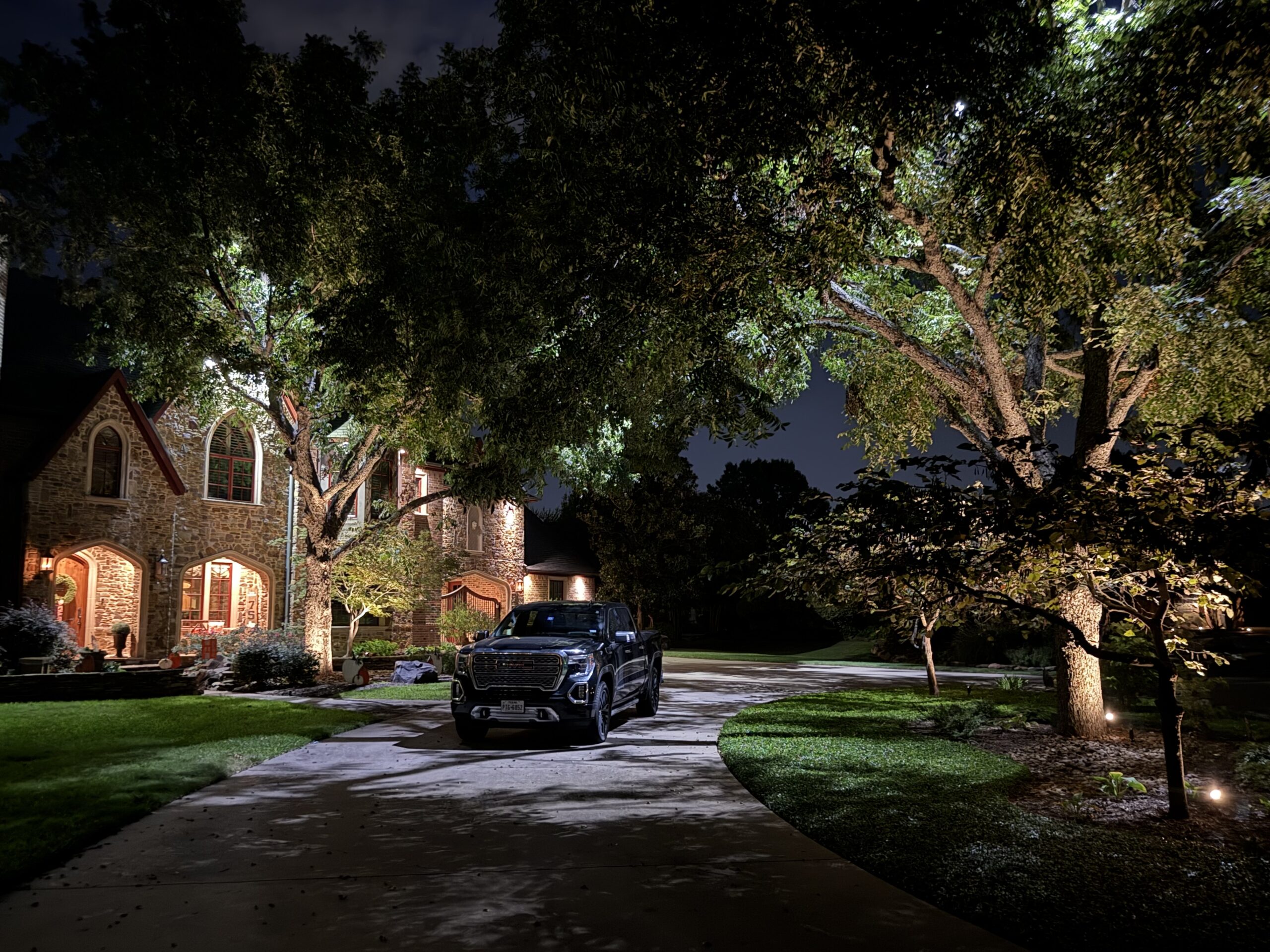
With a thoughtfully designed lighting system, a yard stays usable well into the evening. Pathways stay visible, seating areas stay lit, and the yard functions as an extension of the house rather than a space that shuts down when the sun sets.
Without landscape lighting, that same yard typically functions for only a few hours after sunset before it becomes impractical to use. Once it’s dark, stepping outside to check on the grill, call the kids in, or sit on the patio becomes a matter of using a phone flashlight or flipping on a single porch light that leaves most of the yard in shadow.
This matters most for the parts of the day that already happen outdoors without anyone planning around lighting: dinner on the patio that runs past sunset, kids finishing a game in the yard, or simply sitting outside after a long day without feeling like the evening has to end when the sun goes down.
Even when you’re indoors, thoughtfully placed lighting changes what you see through the windows. Instead of looking out into a dark yard, you continue to enjoy the trees, gardens, and outdoor spaces that are part of your home.
Evening routines around the house
Beyond entertaining, landscape lighting changes smaller daily routines that are easy to overlook until they are different. Walking to the mailbox, taking out the trash, walking the dog, or getting from the car to the front door all happen after dark for at least part of the year, and a well-lit path makes those everyday trips easier, more comfortable, and something you rarely have to think about.
None of this requires floodlights or maximum brightness. A thoughtfully designed system lights the paths and steps people use most, rather than lighting the whole property uniformly, so the result feels natural rather than like a stage.
Homeowners who have lived with a system for a while often describe this as one of the biggest surprises. It’s less about noticing the lighting itself and more about realizing they no longer avoid parts of the yard after dark.
The change is usually gradual rather than dramatic. Over time, the yard simply becomes part of everyday life after dark instead of a space that’s only used when it’s absolutely necessary.
Entertaining and hosting after sunset
A yard that’s comfortable to use after dark naturally becomes a place for more than daytime gatherings. Dinner parties, holiday get-togethers, and casual evenings with neighbors feel more inviting when the space is intentionally lit instead of relying on whatever light happens to spill from the house.
One of the biggest day-to-day benefits is simply getting more enjoyment out of the outdoor spaces you’ve already invested in. More evenings and more months of the year become opportunities to spend time outside instead of moving everything indoors when the sun goes down.
It also eliminates the last-minute scramble of hanging temporary string lights or setting out portable lanterns just to make an evening gathering feel intentional instead of improvised.
When a property already looks welcoming every evening, hosting becomes simpler. Guests arrive to a home that’s ready for them without any extra setup, and the outdoor space feels like a natural extension of the evening instead of something that has to be prepared at the last minute.
Conversations don’t end just because the sun goes down. People naturally linger longer when they can still see one another comfortably and the space continues to feel inviting.
How lighting changes the way a home feels, not just how it looks
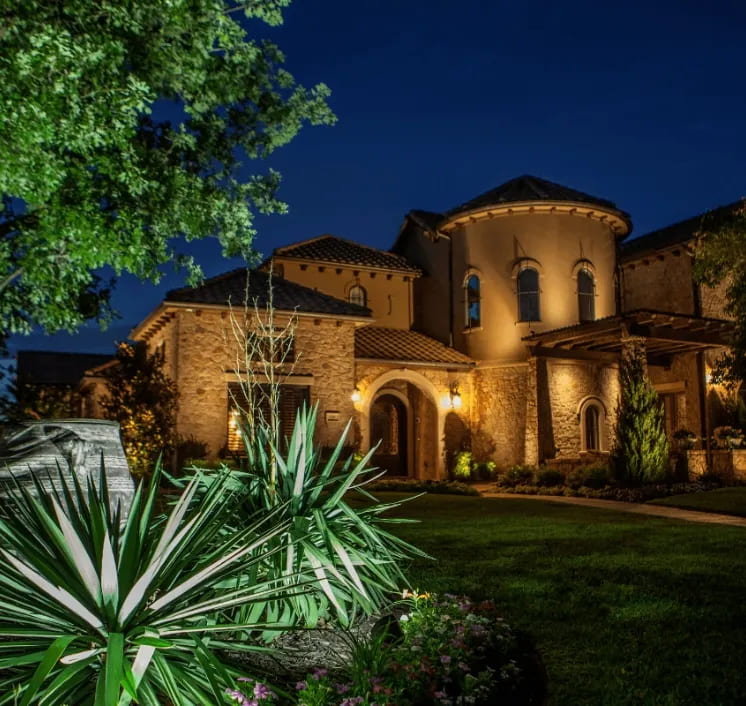
A home lit thoughtfully after dark tends to feel different to the people living there, not just to visitors or people driving by. Architectural uplighting on the home’s facade, soft path lighting, and highlighted trees or garden features create a sense of a finished, cared-for property every night, not just during daylight hours.
This is a different kind of value than curb appeal, which focuses on how a property looks to people outside it. The lived-in version is about how the property feels to the people who come home to it every evening rather than fading into darkness at sunset.
Both are real benefits, but for many homeowners, the daily, lived-in version is the one that ends up mattering more once the system has been in place for a while.
For many homeowners, one of the most satisfying moments is pulling into the driveway after dark and seeing a home that’s warm, welcoming, and intentionally lit instead of disappearing into the night. A home that feels finished every night, rather than only on the nights something is planned, becomes part of the everyday experience of living there.
Designing for how the space gets used
The lighting choices that make this kind of difference come down to understanding how a family moves through and uses their property, not simply installing fixtures evenly across the yard. Where people walk, where they sit, and which features they want to see from inside the house all shape where light should go.
A property with an outdoor living area benefits from lighting that supports that space directly rather than lighting that is spread thin across the whole yard.
Likewise, a family that uses the side yard every evening to reach the garage benefits more from a well-lit path there than from lighting a decorative corner that rarely gets used. Fixtures placed where people walk and spend time often have a much greater day-to-day impact than fixtures chosen primarily for appearance.
This is part of why a design conversation upfront matters more than simply choosing fixtures from a catalog. The best lighting plan reflects how the people who live there actually use the property, not a one-size-fits-all layout.
Good design also considers what homeowners see from inside the house. Windows often frame the landscape at night, so highlighting trees, gardens, or architectural features can make those views just as enjoyable from indoors as they are outside.
Why this is worth thinking about before your next lighting decision
Curb appeal is a real and valid reason to consider landscape lighting, but it is not the only one, and for many homeowners, it is not even the main one once the system has been in place for a while. The daily difference, more usable hours outdoors, easier evening routines, a home that feels finished after dark, is often what homeowners describe when reflecting on how their home changed after the system was installed.
The Perfect Light designs landscape lighting around how a property is used, not just how it should look in photos, since the value most homeowners experience day to day comes from living with the light, not just looking at it.
If you’re deciding whether landscape lighting is worth the investment, look beyond how your home appears from the street. Think about how often your evenings move indoors simply because the yard disappears after sunset. For many homeowners, that’s the question that ultimately matters most. The best landscape lighting doesn’t just change what your property looks like after dark. It changes how often you get to enjoy it.
Ready to see how landscape lighting could change your evenings?
Frequently asked questions
Does landscape lighting really change how much I use my yard?
For many homeowners, yes. A yard that stays lit and usable after sunset tends to get used for more of the evening than one that goes dark, since basic activities like sitting outside, hosting, or moving around the property become easier and more comfortable.
Is landscape lighting only about curb appeal?
No. Curb appeal is a real benefit, but many homeowners report the bigger day-to-day difference is how the property feels and functions for the people living there, not just how it looks from the street.
What parts of a yard benefit most from lighting for everyday use?
Paths, entryways, steps, and outdoor seating areas tend to make the biggest difference in daily use, since those are the spaces people walk through and spend time in after dark.
Do I need my whole yard lit for it to feel different?
Not necessarily. A thoughtfully designed system focuses light on the areas that get used most, rather than lighting the entire property uniformly, which often produces a more natural result than maximum coverage.
How is this different from lighting for safety or security?
This is about everyday comfort and usability: being able to move through and enjoy your yard after dark. Safety and security are a separate, legitimate reason to consider landscape lighting, but a different angle from the everyday lifestyle benefit.
How do I figure out what my property needs?
The best place to start is with how you already use your property. A design conversation that begins with where you walk, gather, relax, and spend time after dark usually leads to a more effective layout than choosing fixtures generically.


Light up your nights