ARE YOU STORM READY?
$2500 OFF Generators & $100 OFF Surge Protectors

How to Choose the Right Landscape Lighting for a Pool or Outdoor Living Space



TL;DR
The right lighting for a pool or outdoor living space balances beautification with real safety needs, like lit steps and walkways, uses fixtures rated for wet or damp locations near water, and is designed by someone who accounts for your home’s existing electrical system, not just where the fixtures look nice.
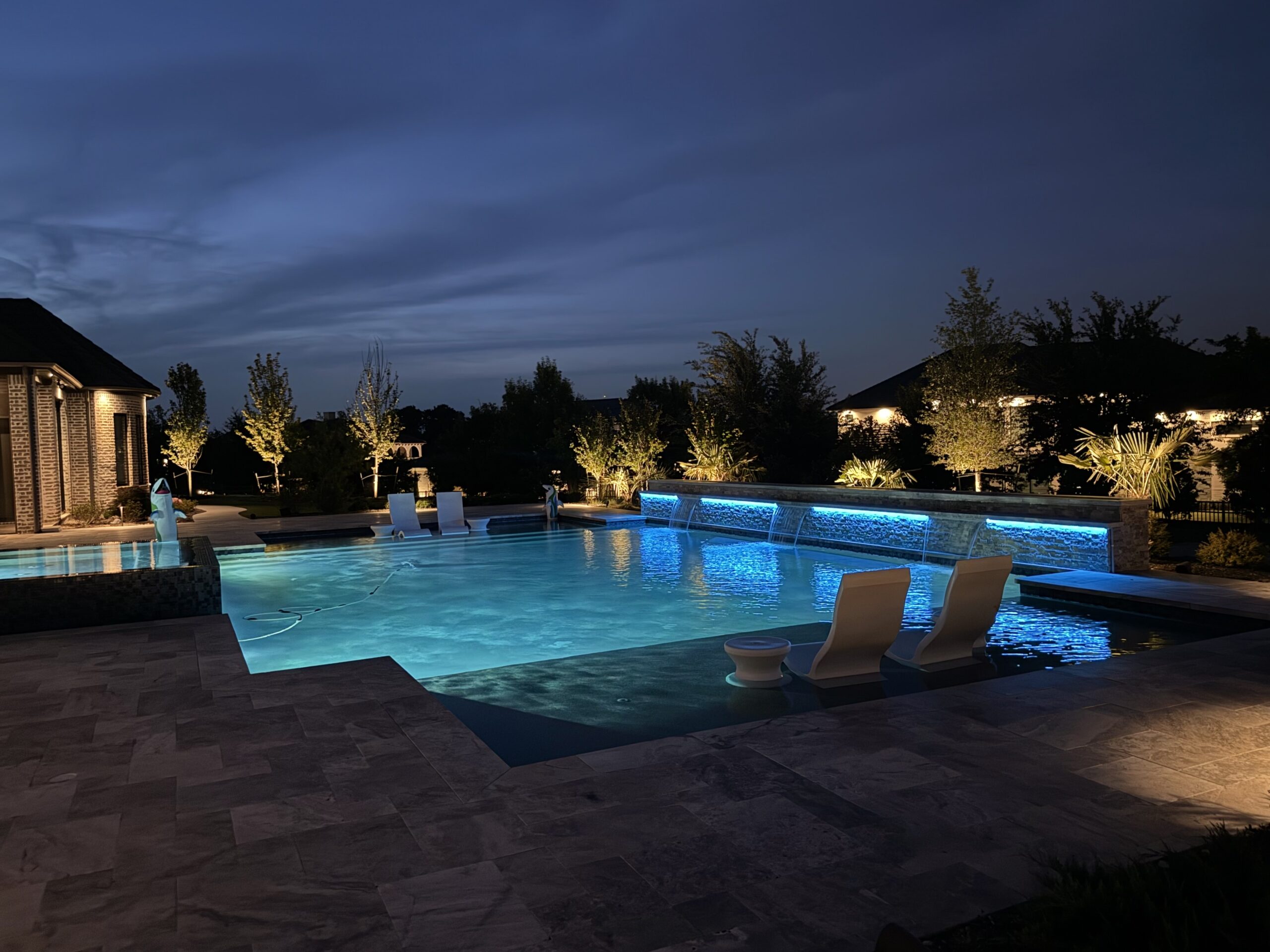
For many homeowners, a pool or outdoor living space is where landscape lighting becomes a priority. It is also where some of the most common outdoor lighting mistakes happen, because water, electricity, and lighting design all come together in the same outdoor space.
What makes pool and outdoor living lighting different from typical landscape lighting
Lighting a flower bed and lighting a pool deck are not the same project, even though both fall under “landscape lighting.” The difference comes down to proximity to water and to the people using that space at night.
Fixtures near a pool or spa need to be rated for wet or damp locations, not just outdoor-rated in a general sense. There is a real difference between a fixture that can handle rain and one that can handle standing water, splashing, and constant humidity right at the coping. Using the wrong rating is not just a durability problem, it is a safety issue, and it is one of the first things a professional installer checks before ever placing a fixture.
Glare matters more here too. A fixture that looks great pointed at a garden bed can be genuinely uncomfortable, even hazardous, if it reflects directly off water into someone’s eyes while they are swimming or trying to see the steps at night. Good pool lighting design accounts for sightlines from the water, from lounge chairs, and from the house, not just how the fixture looks from the yard.
Finally, outdoor living spaces often include features like outdoor kitchens, pergolas, fire features, and seating areas that require additional electrical infrastructure, including more outlets, switches, and sometimes dedicated circuits for equipment like outdoor kitchens or patio heaters. That adds complexity that a lighting-only company without in-house electrical expertise may need to coordinate with another contractor instead of handling those electrical needs directly.
Choose your lighting goals before choosing fixtures
Before picking fixtures, it is worth being honest about what problem you are actually trying to solve, because the design changes depending on the answer. Most landscape lighting customers land in one of a few common situations, and each one points toward a different priority.
If you are the homeowner who finally gets to entertain outdoors after dark, your priority is creating a space that’s comfortable, inviting, and easy to use after dark. Softly lit seating areas, accent lighting on trees or architectural features, and enough general lighting to move safely through the space all support that goal. If safety at night is the driver, maybe because of security concerns, the priority shifts toward broader, more even coverage of walkways, gates, and entry points, with less emphasis on dramatic accent lighting and more on simply being able to see clearly.
There is also the homeowner who is lighting a pool specifically to extend how the space gets used. If the pool currently goes dark at sunset and unused for half the year’s daylight hours, good lighting design turns evening swims and poolside dinners into a real option instead of something that only happens during the summer’s longest days.
None of these priorities are mutually exclusive, and most real projects blend more than one. Starting with your goals almost always leads to a better design than choosing fixtures first and trying to make them fit later.
Where to place lighting around a pool or outdoor living space
While every backyard is different, a few placement principles apply to nearly every pool or outdoor living lighting project.
- Steps and elevation changes get lit first, always. Whatever else the design includes, unlit steps near a pool are the single most common source of accidents in outdoor living spaces after dark. If the budget is limited, lighting steps and changes in elevation should still come first.
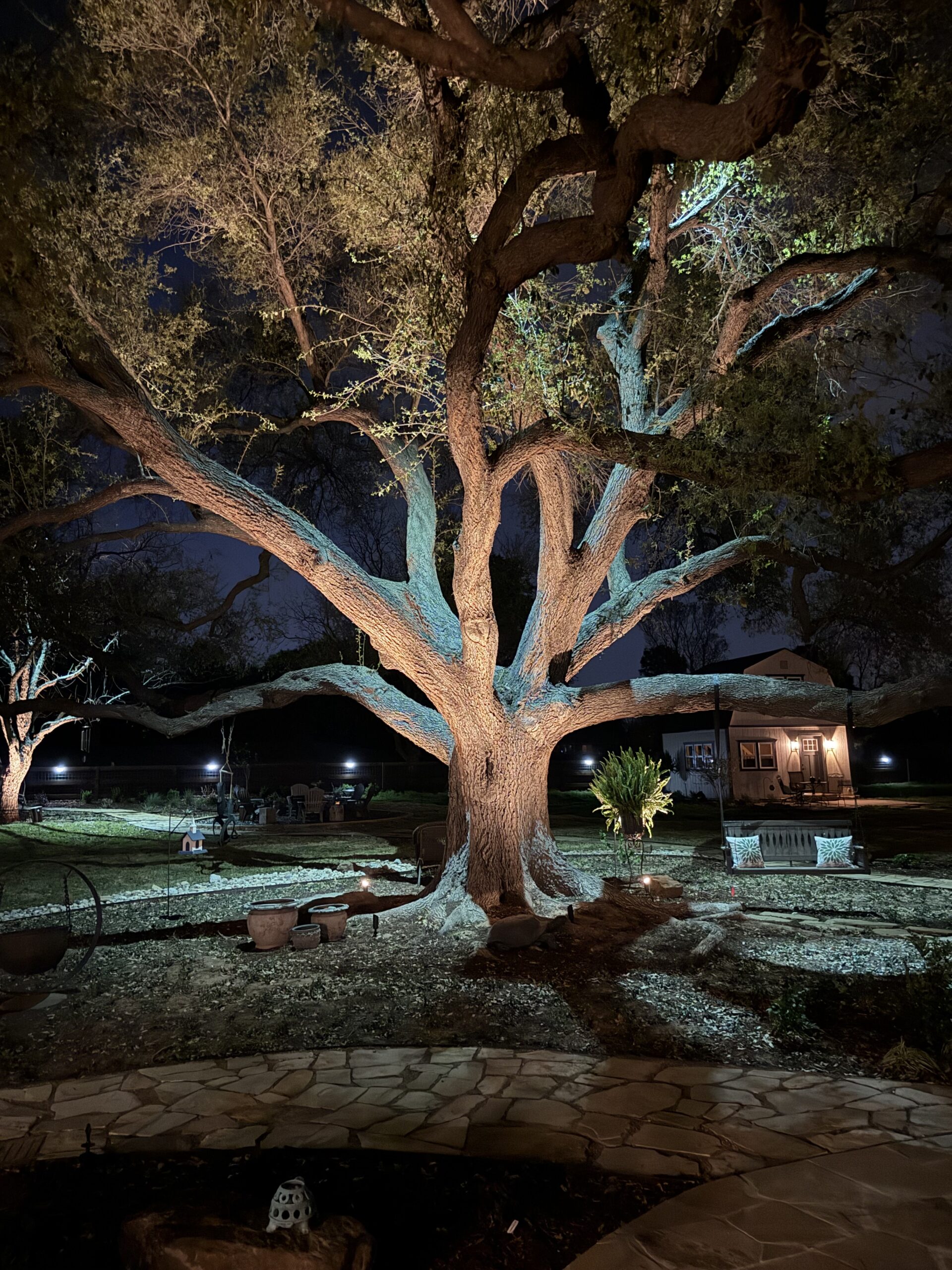
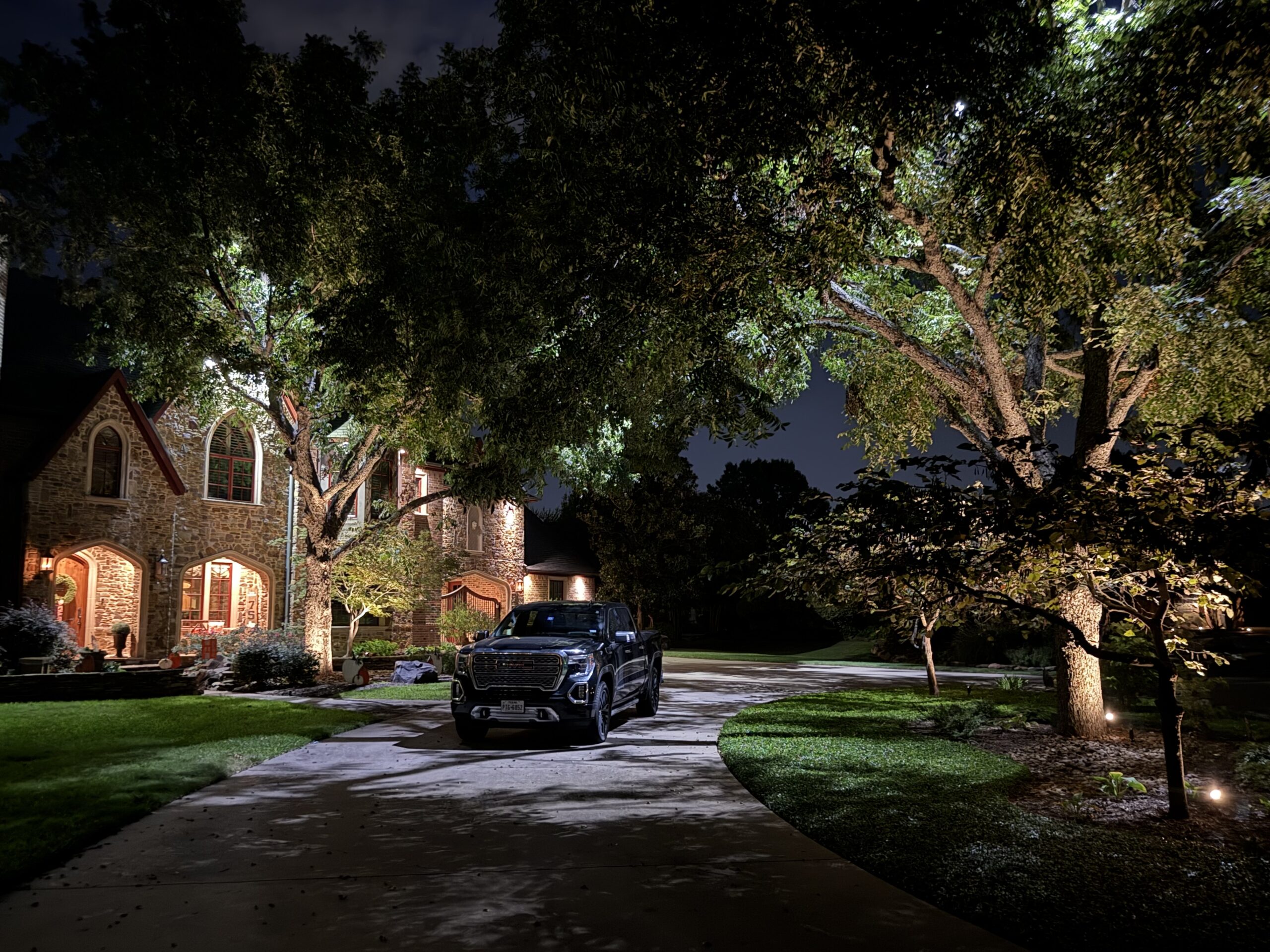
- Downlighting from trees or structures often creates a softer, more natural look than uplighting placed directly at eye level. Moonlighting, mounting fixtures high in trees or under eaves to cast a soft, natural-looking glow downward, tends to look more polished than a yard full of ground-level spotlights pointed up.
- Accent lighting works best on one or two focal features, not everything at once. A single well-lit specimen tree or an architectural column makes a statement. Six evenly spaced uplights on every shrub in the yard reads as generic.
- Path and perimeter lighting should guide movement, not just decorate it. Place fixtures where people naturally move through the space, creating a clear path from the house to the pool or seating area.
- Underwater and waterline lighting needs to be planned before installation, not added after. Retrofitting pool lighting after the pool and surrounding hardscape are complete is typically much more disruptive and expensive than including it in the original design.
Avoid placing fixtures where they’ll shine directly into windows or seating areas. Good lighting should highlight the space without creating glare for the people enjoying it.
Why professional installation matters more near water
DIY landscape lighting kits from a big-box store are a reasonable option for a lot of yard projects. Around a pool, they are a much riskier bet.
Building and electrical codes around pools exist for a reason, and they become more stringent the closer lighting or electrical equipment is to the water. GFCI protection, proper bonding, and required clearances are not details to guess at. An experienced installer understands those requirements and knows when a project should involve a licensed electrician rather than treating it as a standard landscape lighting installation.
This is also where working with one company that provides both landscape lighting and licensed electrical service becomes a practical advantage. Pool projects often uncover electrical needs beyond installing lighting, whether that’s adding a GFCI-protected outlet, increasing transformer capacity, or confirming the home’s electrical panel can support additional circuits. Instead of coordinating between multiple contractors, homeowners can address those needs through one team that understands the entire project.
“One of the most common things we see is homeowners focusing on where they want a fixture instead of how they’ll experience the light. Around a pool especially, beam angles and glare matter just as much as brightness. A small adjustment during installation can completely change how comfortable and usable the space feels at night.”
Ethan Archer, Landscape Lighting Lead, The Perfect Light
Professional installation isn’t just about safety. It’s also about getting the finished look right. Fixture placement, beam angles, glare control, and lighting balance are much easier to get right during installation than after fixtures have already been installed.
What a professional pool or outdoor living lighting project actually costs
The Perfect Light’s landscape lighting projects start at $2,000, reflecting the scope of a professionally designed and installed lighting system rather than a simple DIY setup. Most complete projects land in the $4,000 to $6,000 range, though the final number depends heavily on the specifics of the space.
The final investment depends on several factors. The size of the pool and outdoor living area is one factor, but so is the number of areas being illuminated. Projects that include steps, seating areas, water features, pathways, and architectural elements typically require additional fixtures, wiring, and transformer capacity. The complexity of the hardscape also plays a role. A multi-level patio with a pergola, outdoor kitchen, and fire feature requires more planning than a simple pool deck.
Pool and outdoor living projects typically fall toward the higher end of the investment range because they involve more lighting zones and greater electrical complexity than a typical front-yard installation. Knowing that before your consultation helps set realistic expectations and allows the design to be tailored to your priorities and budget. Because every backyard is different, the final proposal is based on your property’s layout, lighting goals, and electrical requirements rather than a one-size-fits-all package.
How to choose a landscape lighting company for a pool project
Not every landscape lighting company has extensive experience designing and installing lighting around pools and outdoor living spaces. Asking a few specific questions before hiring one can help you understand whether they’re the right fit for your project.
- Ask whether the fixtures they recommend are rated for wet or damp locations, not just general outdoor use.
- Ask whether they handle electrical work in-house or coordinate with a separate electrician if additional electrical work is required.
- Ask how they approach glare control around water, since reflections off the pool surface can affect both comfort and visibility.
Experience matters because companies that have spent decades designing outdoor lighting have encountered a wide variety of properties, layouts, and installation challenges. That experience becomes especially valuable on pool and outdoor living projects, where lighting design, electrical planning, and safety all intersect.
It is also worth asking who will actually install the system, and how consistently that team is trained. A team held to a shared training and installation standard tends to deliver more consistent results, especially on projects where attention to detail matters as much as it does around a pool.
The right landscape lighting design should make your pool or outdoor living space safer, more functional, and more enjoyable after dark. Choosing an experienced team from the beginning helps ensure the finished system not only looks beautiful on installation day, but continues performing well for years to come.
Ready to design lighting for your pool or outdoor living space?
Frequently asked questions
What kind of lighting fixtures are safe to use near a pool?
Fixtures installed near a pool or spa should be rated for wet or damp locations, depending on where they’re being installed. These fixtures are designed to withstand splashing, moisture, and long-term outdoor exposure beyond what standard outdoor fixtures are built for.
Should pool lighting focus on beautification or security?
Most projects combine both goals. The best design starts by identifying what matters most to you, whether that’s creating a more inviting outdoor space, improving visibility after dark, or balancing both.
How much does landscape lighting around a pool typically cost?
The Perfect Light’s landscape lighting projects start at $2,000, with most complete systems falling between $4,000 and $6,000. Pool and outdoor living projects often fall toward the higher end of that range because they typically involve more lighting zones and greater electrical complexity.
Do I need an electrician for pool-area lighting, not just a landscape lighting company?
Often, yes. Pool and outdoor living lighting frequently surfaces electrical needs like GFCI protection, additional outlets, or panel capacity that go beyond standard landscape lighting installation. Choosing a company with in-house electrical capability avoids having to coordinate between two separate contractors.
Can lighting be added around an existing pool without disrupting the deck or landscaping?
In many cases, yes. Landscape lighting can often be added to an existing pool with minimal disruption, although underwater or waterline lighting is typically easier and less expensive to plan during the original pool construction. A professional consultation can explain which options make the most sense for your property.
How long does a pool or outdoor living lighting installation take?
Installation timelines depend on the size of the project, the number of lighting zones, and whether additional electrical work is required. During your consultation, your lighting designer can provide a project-specific timeline based on your property’s layout and goals.


Light up your nights