

How to evaluate Christmas lights, clips or wiring left behind by a previous homeowner before plugging anything in.
Buying a house sometimes means inheriting more than furniture and fixtures, including Christmas lights, clips or wiring still attached to the exterior. Before plugging anything in, check what you can safely see from the ground: cords, plugs, connections and mounting hardware. Don’t climb an unfamiliar roof to finish the inspection yourself. If the age, condition or installation method is unclear, a professional can help you decide whether to keep it, repair it or start over.
Buying a house sometimes means inheriting things the seller didn’t take with them. Shelving stays in the garage. An irrigation controller stays on the wall. And occasionally, Christmas lights, clips, wiring or other holiday lighting components are still attached to the exterior.
That can feel like a bonus: the house is already decorated, so why not plug everything in when December arrives? The better first step is figuring out what you actually inherited.
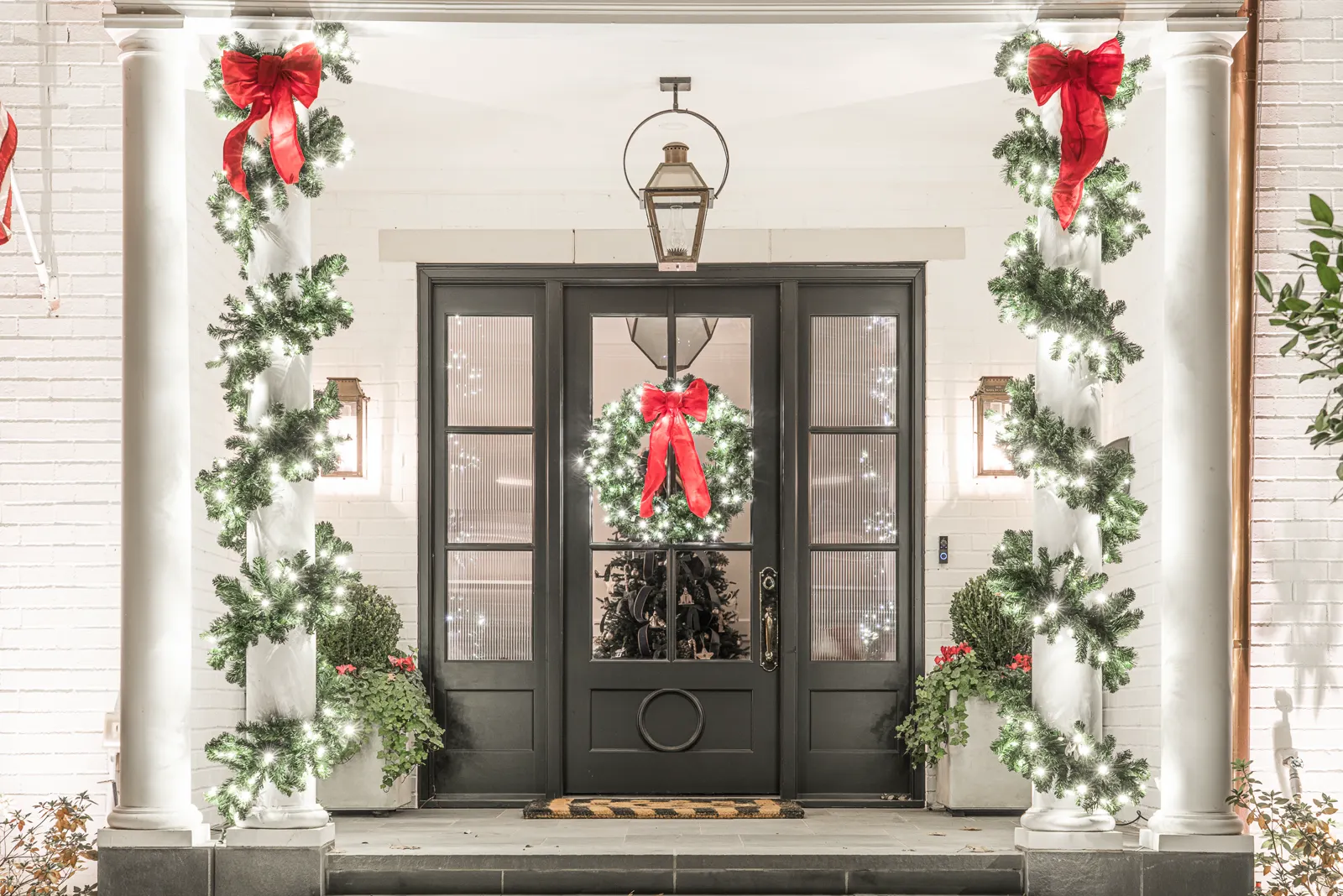
Start With What You Can Safely See From the Ground
You don’t need to climb onto the roof to begin evaluating an inherited display. Walk the property during daylight and look at what you can see safely. Are strands hanging loose? Are clips missing? Are cords pinched, cracked or visibly frayed? Do you see tape, makeshift splices or exposed connections? Are any plugs or extension cords sitting where water can collect?
Look at how the lighting is attached too. Hardware that looks loose, bent or embedded into roofing or siding deserves a closer look before anything gets energized. This is a screening step, not a professional safety inspection. A ground-level look can catch obvious problems, but it can’t tell you the condition of every connection or what’s happening underneath a mounting point on the roof. If you can’t see an area safely, don’t turn the inspection into a DIY roof climb just because the lights happen to already be up there.
Don’t Assume You Know How Old the System Is
The age of the house and the age of the Christmas lighting aren’t the same thing. A 20-year-old home could have lights installed last season. A recently renovated property could still have older extension cords or reused hardware. Without records from the seller or the original installer, appearance alone may not tell you when the system went up or how many seasons the materials have spent outdoors.
That’s why condition matters more than guessing an age. Look for cracking, brittleness, fading, corrosion or damaged insulation. If the materials have manufacturer markings, those can offer useful information, but don’t assume every cord or strand found outside is rated for extended outdoor exposure just because it’s survived this long. If you have access to the seller, ask whether a professional company installed the display, whether the materials were meant to stay with the property, and whether there’s an account or service history worth referencing.
Check the Mounting Method Without Damaging the Home
How the lights are attached matters because the hardware interacts with the roof, gutters, fascia, siding or masonry. From the ground, look for clips or other purpose-built mounting hardware, and note any spots where the lighting appears attached with nails, staples, screws, adhesives or improvised fasteners.
One visible fastener doesn’t automatically mean the roof has been damaged. The appropriate mounting method depends on the surface and the original installation. But penetrations through roofing materials, loose hardware or attachments that appear to be pulling on gutters are reasonable grounds to have the area evaluated before reusing the display. The same applies if the lights are mounted on stone, stucco or another exterior material. An inherited system may reflect the previous homeowner’s preferences and installer, not necessarily an approach that’s appropriate for your home or the look you want going forward.
Look at Cords, Plugs and Connections You Can Access
Outdoor lighting lives in weather, so electrical components deserve attention before the display gets powered up for another season. At accessible locations, inspect cords and plugs for obvious cuts, cracked insulation, exposed conductors, damaged plug blades, scorch marks or other visible deterioration. If a connection looks improvised or damaged, don’t just wrap it with more tape and assume the problem is solved.
Also think about where the system gets its power. If you don’t know which outlet, timer or circuit the previous owner used, that’s another reason to slow down before plugging everything back in. A Christmas lighting installer can evaluate the display itself, but concerns involving the home’s wiring, receptacles, breakers or permanent electrical system call for a qualified electrician. Which professional you need depends on what the inspection actually turns up.
What a Professional Evaluation Can Tell You
Before booking an assessment with any provider, ask what the service actually includes. Not every Christmas lighting company evaluates or repairs systems installed by someone else, so it’s worth asking directly what’s possible for your specific setup rather than assuming every installer handles this the same way. A useful evaluation should answer practical questions: what materials are present, whether the visible mounting points suit the surfaces involved, whether the cords and connections are in serviceable condition, and what, if anything, could reasonably be reused.
Keep It, Repair It or Start Over
Once you understand the condition of the existing setup, the decision gets easier. If the materials are in good shape, the mounting approach suits the home and the display fits your preferences, there may be no reason to replace everything simply because someone else bought it. If there are isolated issues, ask whether those components can be repaired or replaced; the answer depends on compatibility, condition and the provider’s own policies.
Starting over tends to make more sense when the materials are broadly deteriorated, the mounting approach doesn’t suit the home, the design doesn’t fit what you want, or a provider can’t support the existing system within its program. This is also a design decision as much as a safety one. The previous homeowner may have emphasized parts of the house you wouldn’t choose yourself, and a new installation is a chance to rethink the display rather than default to someone else’s plan.
If the Previous Owner Used The Perfect Light
If you know the previous owner had a Christmas lighting account with The Perfect Light, contact the company before assuming the account, the lifetime materials guarantee or any other terms automatically transfer with the home. The materials may physically remain at the property, but account ownership, renewal terms and service history are separate questions.
Have the property address and any documentation the seller left behind when you call. That gives the team the best chance of identifying whether there’s an existing account tied to the home and explaining what options are available to you as the new owner.
A Simple New-Homeowner Checklist
Before using inherited Christmas lighting, work through a short list. Confirm what was actually left behind. Inspect accessible cords, plugs and mounting points during daylight. Ask the seller for installer or account information if it’s available. Identify how the system was powered. Skip the unfamiliar roof climb. And if anything looks damaged or improvised, get a qualified professional involved before energizing the display.
The point isn’t to turn Christmas lights into another closing-day stressor. It’s to make sure a convenient leftover doesn’t become an unknown you only discover after the system is already running.
Book a design consultation.
Christmas lighting program or call (972) 445-9820.
Frequently asked questions
Is it safe to use Christmas lights left by the previous homeowner?
It depends on the condition of the materials, connections, mounting method and power source. Start with a ground-level visual check, and get professional help if the system’s condition or installation method is unclear.
Should I climb onto the roof to inspect existing Christmas lights?
No. You can identify many obvious issues from the ground. An unfamiliar roof isn’t worth climbing just to inspect holiday lighting, and roof-level components should be evaluated by a qualified professional instead.
How do I know whether outdoor Christmas light wiring is damaged?
Watch for cracked or frayed insulation, exposed conductors, damaged plugs, corrosion, scorch marks or improvised connections. If you see damage, don’t energize that portion of the system until it’s been evaluated.
Can a Christmas lighting company reuse lights installed by someone else?
It depends on the company and what it finds. Ask directly before assuming an inherited display can be worked into a new service plan.
Should I replace existing Christmas lighting when I buy a house?
Not automatically. Replacement tends to make sense when the materials are deteriorated, the mounting method doesn’t suit the home, the design doesn’t fit your preferences, or a provider can’t support the existing system within its program.
Can Christmas light mounting damage a roof or gutter?
Improperly selected or installed hardware can affect shingles, gutters, fascia or siding. The risk depends on the roof, the mounting method and the existing condition, which is exactly why an evaluation matters more than a guess.
What if the previous homeowner used The Perfect Light?
Contact The Perfect Light with the property address and any account information you have. Ask whether an existing account can be identified and what your options are as the new owner.