

Why roof and gutter condition, not the year a home was built, determines how a crew mounts a holiday lighting display.
An older home doesn’t automatically have a brittle roof, and a newer home doesn’t automatically have a sturdy one. What matters is the actual condition of the roofline, not the year the house was built. The Perfect Light’s crews evaluate shingles, gutters and fascia before choosing mounting points, and use clip-based, no-penetration hardware designed to hold without nailing, screwing or stapling into the material.
A home built in the 1970s can have a roof that’s been through fifty summers of heat and fifty winters of contraction, and a home built five years ago can already have a damaged gutter or soft fascia from a bad install. Age is a reasonable starting assumption. It isn’t the thing that actually determines how a crew should mount a Christmas lighting display. Condition is. That’s the distinction this comes down to, and it’s why evaluating the property matters more than guessing from the date on the deed.
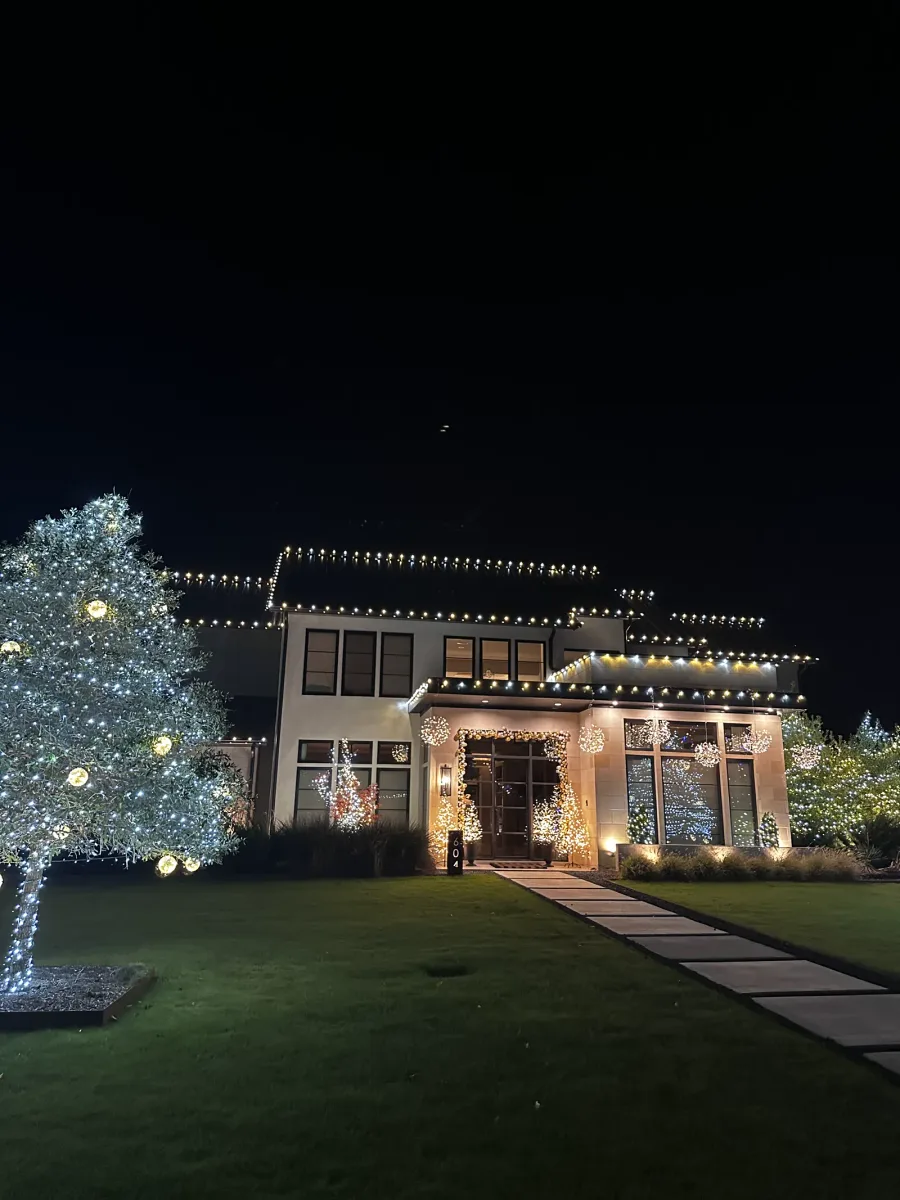
Why Roof and Gutter Condition Matters More Than Home Age
Christmas lights have to attach somewhere, and the condition of that mounting surface, not the home’s age, determines what approach is appropriate. Shingles can become brittle from sun exposure and age. Gutters can loosen, crack or pull away from fascia. Wood trim can deteriorate. Previous renovations can leave a single property with several generations of materials, an original section with one roof type, a later addition with another, a porch or garage with a third.
Those conditions show up more often on older homes, but they’re not universal to older homes, and they’re not absent from newer ones. A newly built home with a rushed gutter install can be more vulnerable at a mounting point than a well-maintained 1970s roof. That’s why a crew assesses the actual roofline in front of them rather than applying one assumption based on the home’s construction year.
Homeowners often underestimate the cost of getting this wrong. A small puncture that goes unnoticed for a season can lead to moisture intrusion that isn’t visible until there’s a stain on a ceiling or a soft spot in the decking months later. Replacing a damaged section of gutter or repairing a roof leak costs far more, and causes far more disruption, than the holiday lighting display that created the opening ever did.
What Clip-Based, No-Penetration Mounting Means
The Perfect Light’s crews use clip-based, no-penetration mounting hardware, purpose-built clips that grip onto the shingle edge, gutter lip or fascia board without any nails, screws or staples going into the material itself. The clips distribute hold pressure across a wider area rather than concentrating it at a single penetration point, and they come off cleanly at takedown without leaving holes, marks or residue behind.
No-penetration mounting also isn’t a claim of zero risk on every surface. A clip suitable for an asphalt-shingle edge isn’t automatically the right choice for tile, standing-seam metal, stone or historic wood trim, which is exactly why the crew’s assessment, not the hardware alone, is what protects the home.
How Crews Assess a Roofline Before Installing
Before any lighting goes up, a crew walks the roofline to check the condition of the shingles, fascia and gutters at the specific points where mounting will happen, noting anything already compromised, a cracked gutter, soft fascia, loose shingle tabs, so it can be avoided rather than used as a mounting point regardless of what the original design called for.
This step matters more on a property with a longer renovation history or decorative architectural details: original wood trim, specialty gutters or a roofline with multiple pitches from additions built at different points. A newer, uniform roofline gives a crew fewer judgment calls to make. A home with more history usually has more of them, which is part of why training and repeated experience matters as much as the hardware itself.
What Happens If the Roofline Is Already Damaged
If a crew finds a compromised area during the walkthrough, a gutter already loose, fascia already deteriorated, that gets documented and the mounting plan adapts around it rather than placing additional stress on a surface that shouldn’t carry it. That can mean shifting a mounting point, scaling back the design in that one area or recommending the homeowner have it looked at by a roofing professional before the display goes up there. A Christmas lighting crew isn’t in a position to certify the condition of an aging roof, and the responsible move is to flag it rather than mount around it anyway.
Mentioning known roof or gutter issues during the design consultation, rather than waiting for installation day, gives the crew time to plan for it instead of improvising on the roofline.
Takedown Gets the Same Care as Installation
A careful installation can still be undermined by careless removal. Clips come off according to their intended method rather than pulled quickly from brittle or delicate surfaces, and the same crew that installs the display is responsible for taking it down at the end of the season, using the same care in reverse. That continuity, one team handling both ends of the job, is part of why the no-penetration approach holds up over multiple seasons rather than just looking good on day one.
What This Looks Like on an Older Houston Home
A typical Houston home built in the 1960s or 1970s often has original or early-replacement gutters and shingle materials that have been through multiple re-roofing cycles. On a property like this, the crew’s walkthrough usually identifies a few specific spots that need a lighter touch or an adjusted clip placement, rather than treating the whole roofline the same way.
This is also where the lifetime materials guarantee connects to the installation approach. Because the clips and mounting hardware are built to last and the technique is designed not to stress the home, the same materials get reinstalled and removed carefully, year after year, without trading a one-season display for long-term wear on the roof.
One note on roof warranties: a no-penetration method avoids the obvious concern of creating new nail or screw holes, but only the warranty provider can interpret its own terms. If a home has an active roof warranty, it’s worth a quick check of what the warranty allows for temporary attachments before the design is finalized.
Book a design consultation.
Christmas lighting program or call (972) 445-9820.
Frequently asked questions
Do you use nails or screws to hang Christmas lights?
No. The Perfect Light uses clip-based, no-penetration mounting hardware that attaches to the shingle edge, gutter lip or fascia board without nailing, screwing or stapling into the material, protecting the roofline during both installation and takedown.
Is an older roof too fragile for Christmas lights?
Not necessarily. Age alone doesn’t determine whether a roof can support a lighting installation. The material, condition and any previous repairs matter more than the home’s construction year, which is why a crew evaluates the actual roofline rather than assuming based on age.
What if my gutters are already damaged before installation?
Tell the crew during the consultation if you know about existing damage. Crews also assess the roofline before installing and will avoid mounting at any point that’s already compromised, adapting the plan around it instead.
Does clip-based mounting work on any roof type?
The approach applies across common roof types, including shingle, tile and metal, but the specific hardware and placement is adjusted based on the material and its condition, which is why the same clip isn’t used identically everywhere.
Will Christmas lighting installation void my roof warranty?
That depends on your specific roofing manufacturer’s warranty terms. No-penetration mounting is designed to avoid the kind of physical alteration, like nail holes, that’s more likely to raise a warranty concern, but homeowners with an active warranty should check their own terms if this is a concern.
Is takedown as careful as installation on an older home?
Yes. The same crew and the same clip-based approach apply at takedown, since removing mounting hardware carelessly can stress the same materials the installation was designed to protect in the first place.