
Christmas lighting becomes more hazardous when installation involves ladders, rooflines, difficult-to-reach areas, damaged cords, outdoor electrical connections, or too much load on a circuit. Work at height and larger electrical setups introduce risks that aren’t present in a simple ground-level display. Professional installation keeps the homeowner off the roof and shifts the installation, in-season service, and eventual takedown to a trained crew.
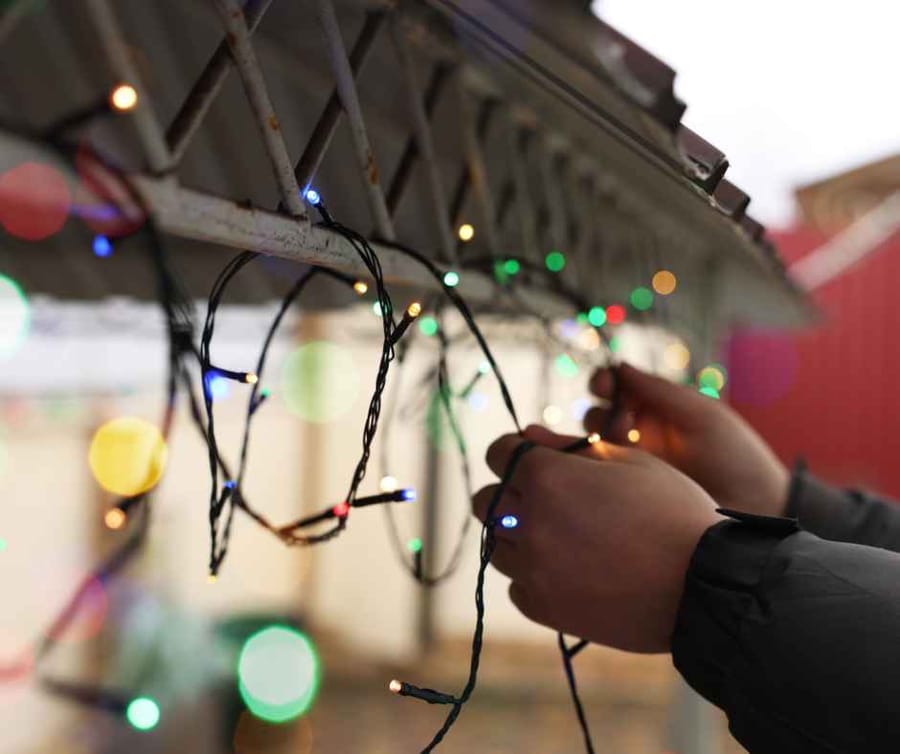
Most Christmas decorations aren’t inherently dangerous. The risk changes when the project involves height, difficult access, or a more complex electrical setup. Rooflines, second-story eaves, ladders, long extension-cord runs, damaged wiring, and heavily loaded circuits introduce considerations that aren’t present in a simple ground-level display.
For homeowners considering a larger exterior display, understanding where those risks begin also helps explain what a professional Christmas lighting company is actually taking responsibility for beyond simply hanging the lights.
Where DIY Christmas lighting gets risky
The risks in holiday lighting tend to increase in a few predictable places: working at height, using damaged or inappropriate electrical equipment, and putting too much load on a circuit. Extension cords can introduce another hazard when they’re damaged, not rated for outdoor use, or routed across areas where people walk.
Falls are particularly important to take seriously, which is why the difference between decorating from the ground and working from a ladder or roof matters so much.
Electrical considerations matter even when height isn’t involved. Damaged strands or cords, products used in environments they aren’t rated for, too many connected strands, and cords routed through high-traffic areas can all introduce additional hazards.
The point isn’t that a string of Christmas lights is inherently dangerous. A few lights on a ground-level shrub are a very different project from installing lights along a second-story roofline or building a large display across multiple areas of a property. The more height, equipment, electrical load, and difficult access a project introduces, the more important it becomes to understand the risks before starting.
Why rooflines and ladders change the risk
Working from a ladder or roof changes the risk of a Christmas lighting project quickly. According to the U.S. Consumer Product Safety Commission’s 2025 holiday safety guidance, about 160 Christmas decorating-related injuries occur each day during the holiday season, with nearly half involving falls. That makes working at height one of the clearest dividing lines between a simple decorating project and one that carries greater risk.
The conditions around the ladder matter, too. Uneven or wet ground, poor lighting, an unstable setup, reaching too far to one side, or carrying decorations while climbing can all make the job harder to control. Second-story rooflines and difficult-to-reach eaves add another layer because the consequences of losing your balance become much greater as the working height increases.
This is one of the practical differences between a homeowner hanging lights once a year and a trained installation crew. Professional crews can select equipment appropriate for the height and access conditions of the property and plan the installation without asking the homeowner to climb onto a roof or work from an unfamiliar ladder setup.
Experience matters, but it doesn’t make working at height risk-free. The advantage is having training, appropriate equipment, and a process designed around doing the work safely rather than improvising once you’re already on the ladder.
Christmas lighting safety doesn’t stop at the roofline
Falls may be the most obvious concern with Christmas light installation, but the electrical setup matters too. A larger exterior display can involve multiple light strands, extension cords, outdoor receptacles, connections exposed to weather, and other electrical loads already sharing the same circuits.
The challenge for a homeowner is that those conditions aren’t always obvious from looking at an outlet. Adding electrical load without understanding what else is already on the circuit can contribute to breaker trips or overload conditions. Damaged cords, products that aren’t rated for outdoor use, and connections that aren’t properly protected from the elements can introduce additional hazards.
Extension cords deserve particular attention. They should be rated for the environment where they’re being used and positioned so they aren’t easily damaged or create hazards around walkways, doors, driveways, or other areas where people move through the property.
A professional installation takes those conditions into account as part of planning the display. Instead of deciding where the lights go first and figuring out how to power them afterward, the electrical setup and the design can be considered together. For a larger display, that’s an important distinction: how the display is powered matters just as much as how it looks once the lights come on.
What The Perfect Light’s trained crews do differently
A professional Christmas lighting installation isn’t simply the same job a homeowner would do with better ladders. The difference starts before the first strand goes up. The crew has to evaluate the property, plan how the display will be installed and powered, choose materials suited for exterior use, and account for the access and working conditions around the home.
The Perfect Light’s crews approach those pieces as part of one installation rather than solving them as they come up. The display is custom-designed around the home’s architecture, and trained crews install commercial-grade lighting using installation methods selected for the roofline, landscaping, and other areas included in the design.
It also means the responsibility doesn’t shift back to the homeowner once installation day is over. The Perfect Light provides in-season service and commits to being out within 48 hours if something goes wrong. The homeowner doesn’t need to be home for the service visit. At the end of the season, the team returns for takedown and stores the customer’s lighting materials until the following year.
That’s an important distinction when thinking about Christmas lighting safety. Hiring a professional isn’t only about avoiding the ladder on installation day. It’s about having one team responsible for the display from installation through in-season service and takedown, so the homeowner isn’t climbing back up to troubleshoot a section of lights in December or returning to the roof to remove everything after the holidays.
When professional Christmas lighting makes sense
Not every Christmas decoration requires professional installation. But once a display involves rooflines, second-story areas, tall trees, difficult access, extensive outdoor wiring, or multiple areas of the property, the project becomes more than simply hanging lights.
At that point, hiring a professional removes several responsibilities from the homeowner at once. There’s no need to determine how to safely reach difficult areas, figure out how a larger display will be installed and powered, return to the roof if something stops working, or climb back up after the holidays to take everything down.
With The Perfect Light, that responsibility stays with the same team throughout the season. The display is custom-designed and professionally installed, in-season service is included, and the team returns for takedown and off-season storage. The homeowner owns the lighting materials, which are covered by a lifetime materials guarantee while the account remains active.
The result isn’t simply a professionally installed display. It’s a Christmas lighting program designed so the homeowner can enjoy the finished product without taking on the height, installation, maintenance, and takedown work that comes with creating it.
Enjoy the lights. Leave the installation to The Perfect Light.
The Perfect Light handles your Christmas lighting from custom design and professional installation through in-season service, takedown, and storage. You get the finished display without taking on the ladders, rooflines, troubleshooting, or takedown yourself.
Frequently asked questions
Is it safe to hang your own Christmas lights?
The risk depends on the scope of the display. Ground-level decorating is different from installing lights along rooflines, second-story eaves, tall trees, or other difficult-to-reach areas. Once ladders, roof access, extensive outdoor wiring, or a larger electrical setup are involved, professional installation keeps the homeowner from taking on those parts of the project personally.
What is the biggest safety risk when hanging Christmas lights?
Falls are one of the most significant risks associated with holiday decorating. Working from ladders or roofs adds height, balance, access, and equipment considerations that aren’t present in a ground-level display. Those risks can increase further when surfaces are wet, uneven, or difficult to access.
Can Christmas lights overload a circuit?
They can if the total electrical load on a circuit exceeds what the circuit is designed to handle. A larger Christmas display may also share a circuit with other electrical loads around the home. Professional installation allows the display and its electrical requirements to be considered together rather than simply adding lights wherever an outlet is available.
Are LED Christmas lights safer than incandescent Christmas lights?
LED Christmas lights generally use less electricity and produce less heat than traditional incandescent lights, which can reduce some electrical and heat-related concerns. But using LEDs doesn’t eliminate the risks associated with ladders, roof access, damaged equipment, outdoor connections, extension cords, or an improperly planned electrical setup.
Should I hire a professional to install Christmas lights on a two-story home?
A two-story display is a strong candidate for professional installation because reaching second-story rooflines, eaves, peaks, and other elevated areas introduces fall risks that aren’t present in a ground-level display. A trained installation crew can plan the display around the home’s architecture and handle the elevated installation, in-season service, and eventual takedown without requiring the homeowner to repeatedly work at height.
What happens if professionally installed Christmas lights stop working?
With The Perfect Light, in-season service is part of the Christmas lighting program, and the team commits to being out within 48 hours if something goes wrong. The homeowner doesn’t need to be home for the service visit, which means homeowners aren’t expected to climb back onto a ladder or roof to troubleshoot the display themselves.
Does The Perfect Light take Christmas lights down after the holidays?
Yes. The Perfect Light handles takedown after the season and stores the customer’s lighting materials until the following installation season. Because takedown is part of the service, homeowners don’t have to return to the roofline or other difficult-to-reach areas to remove the display themselves.