

C9 bulbs create a bold, defined line that works especially well along rooflines. Permanent holiday lighting systems mount under the eaves and can stay in place year-round, which creates a different look (and a different decision) than lights installed along the roofline each season. Icicle lights add hanging strands that create a layered effect along eaves and other horizontal edges. The right choice depends on the part of the home you’re lighting, how you want the display to look from the street, and whether you’re using one style, a permanent system, or a combination across the property.
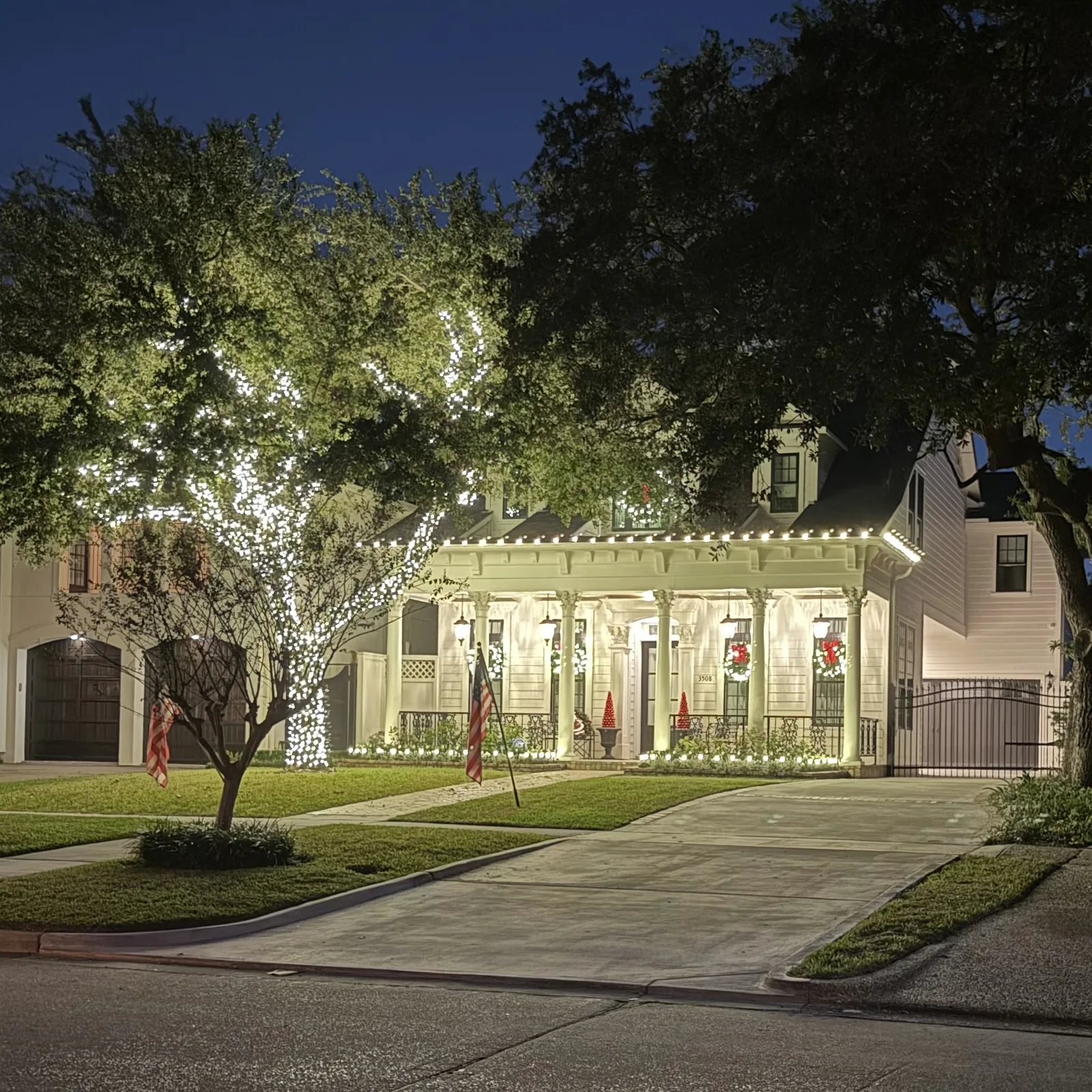
C9 bulbs: the classic roofline look
C9 bulbs are one of the larger traditional Christmas bulb styles, which helps each individual bulb remain visible from the street. That makes them especially well suited for rooflines, peaks, and other architectural edges where the goal is a bold, defined outline.
Consistent spacing is part of what creates that polished look. Rather than blending into one continuous line of light, C9 bulbs remain visually distinct from one another, helping define the shape of the home from a distance.
C9 bulbs are also available in different color options, so the same bulb style can create very different looks depending on the overall design. Warm white can create a more traditional appearance, while other color combinations can make the display feel more playful or customized.
Best suited for: rooflines, peaks, building outlines, and other prominent architectural edges meant to be seen from a distance.
Permanent holiday lighting: a different look, installed once
Permanent holiday lighting is a different category of product altogether. Systems such as JellyFish, OELO, and Govee are installed once, typically in a low-profile channel mounted under the eaves, and are designed to stay in place year-round rather than go up and come down with the season. Most are app-controlled, so the color, pattern, and schedule can change for different holidays and everyday use without anyone touching a ladder.
That’s also what makes the look so different from traditional Christmas lights. Permanent systems sit under the eaves and read as a glow or wash across the home, while classic Christmas lights, including C9 bulbs, are installed along the front of the roofline to trace the home’s outline for the more traditional holiday look most homeowners picture when they think of Christmas lighting.
Having permanent lighting already installed doesn’t rule out a traditional Christmas look. The Perfect Light can still add Christmas lights along the roofline or ridges, or layer in wrapped trees, stake lights, and other seasonal accents, so the home gets the classic holiday feel for the season without changing what’s already in place under the eaves.
Best suited for: homeowners who want a flexible, year-round accent light that can shift for different holidays and events, often paired with roofline Christmas lights or yard accents for a more traditional look each season.
LED icicle lights: a layered, cascading look
Icicle lights use a horizontal main wire with shorter strands hanging down at varying lengths. That creates the cascading, dimensional effect that makes them visually different from the defined points of C9 bulbs or the steady, year-round glow of a permanent lighting system.
They work especially well along eaves and other horizontal architectural features where the hanging strands can be seen from the ground. The length and spacing of the drops can also change the overall effect, from a more subtle layer of light to a fuller, more dramatic look.
Like C9 bulbs, icicle lights are available in different color options, so the style of the light and the color of the display can be considered separately.
Best suited for: eaves and other horizontal architectural features where the design calls for a hanging, layered effect.
Mixing Christmas lighting styles across one property
A Christmas lighting design doesn’t have to use the same type of light everywhere. Different styles can serve different purposes across the same property. C9 bulbs might define the roofline, while another lighting style adds dimension to an eave, highlights an entryway, or follows a curved architectural feature.
The key is making those elements feel like parts of one design rather than separate lighting decisions. Color, spacing, placement, and the home’s architecture all affect how different styles look next to one another.
That’s also why more isn’t necessarily better. Some homes can support several lighting styles without looking busy, while others may look more polished with a simpler combination. The right mix depends on which architectural features the design is meant to emphasize and how the property will be viewed from the street.
A cohesive display should draw your eye across the property intentionally, with each lighting style supporting the overall design rather than competing for attention.
How your consultation determines the right mix
This is a trained decision, not a product pick. During a design consultation, The Perfect Light’s team walks the property and looks at details such as roofline pitch, trim, tree placement, architectural style, and the features the homeowner wants to highlight. From there, the designer can determine which lighting styles make sense for different parts of the property and how those elements should work together.
The team also considers what’s already part of the home’s exterior, including porch lights, address numbers, and other architectural accents. The goal is for the Christmas lighting to complement the home rather than compete with the features that are already there.
That process creates a design built around the individual property rather than a one-size-fits-all lighting package.
Let’s design your home’s Christmas lighting
You don’t have to decide between C9 bulbs, permanent lighting, icicles, or a combination before your consultation. The Perfect Light’s design team can walk the property, talk through the look you want, and recommend lighting styles based on your home’s architecture and the features you want to highlight.
Frequently asked questions
Can I mix light styles on one house?
Yes. Different Christmas lighting styles can work together when each serves a specific purpose in the overall design. For example, one style might define the roofline while another highlights an entryway or architectural feature. The key is making the color, spacing, and placement feel cohesive across the property.
Do LED Christmas lights use less energy than incandescent lights?
LED Christmas lights generally use less electricity than comparable incandescent options. The exact power use depends on the bulb and product being used, so energy consumption is only one factor to consider when choosing a lighting style. For a professionally designed display, the visual effect and where the lights will be installed matter too.
Can Christmas lights be added to a home that already has permanent lighting?
Yes. Permanent lighting systems typically sit under the eaves, so The Perfect Light can still install Christmas lights along the roofline or ridges, or add wrapped trees, stake lights, and other accents, to create a more traditional holiday look for the season without touching the permanent system.
How do I choose between C9 bulbs, permanent lighting, and icicle lights?
Start with the effect you want and the part of the home you’re lighting. C9 bulbs create distinct points of light that work well when you want a bold, defined roofline outline. Permanent lighting systems mount under the eaves and stay up year-round, offering a different look and more flexibility for everyday use and other holidays. Icicle lights create a hanging, layered effect along horizontal features such as eaves. A professional design may combine more than one of these across the property.
Do I need to buy my own lights before the consultation?
No. The Perfect Light supplies the lighting materials as part of its Christmas lighting program. During the consultation, the design team helps determine which lighting styles and placements make sense for your home, so you don’t need to choose or purchase the lights beforehand.