

Moonlighting is a landscape lighting technique that mounts fixtures high in a mature tree’s canopy to cast a dappled, natural-looking light through the branches. It works best over patios, lawns and other gathering spaces beneath a mature canopy, and only on trees with the right structure to support it, according to The Perfect Light’s landscape lighting team.
Moonlighting is a landscape lighting technique where fixtures are mounted high in a mature tree’s canopy and aimed downward, casting a dappled pattern of light through the branches that mimics real moonlight coming through leaves. It is one of the more difficult techniques in landscape lighting to execute well, and it is also one of the most distinctive results a designer can create.
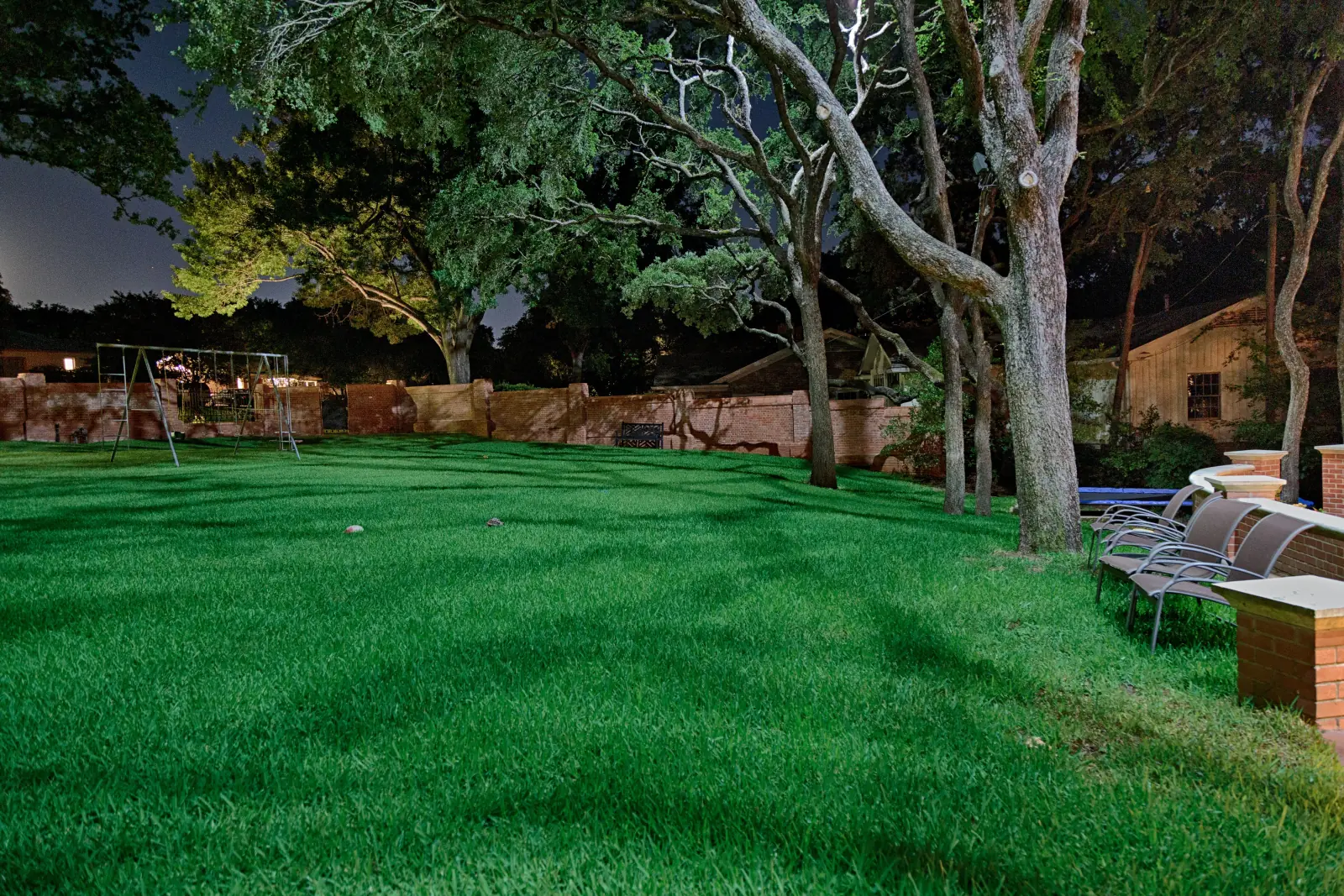
Unlike traditional outdoor tree lighting, moonlighting focuses on recreating the appearance of natural moonlight by allowing light to filter through the branches instead of drawing attention to the tree itself.
Before a fixture goes into a tree, a landscape lighting designer is reading the property. Moonlighting isn’t a technique that’s applied everywhere. It’s only recommended when the right tree, the right location and the way the homeowner plans to use the space all align. The Perfect Light’s landscape lighting design team works with homeowners across Texas to make that call property by property.
How a Landscape Lighting Designer Reads a Property Before Recommending a Technique
A landscape lighting designer walks a property before recommending any specific technique, and that walkthrough looks at three things in particular: canopy structure and density, the sightlines from inside the house, and what is already established in the hardscape and planting beds.
Canopy structure matters because moonlighting only works on trees with a canopy high and open enough to let dappled light through without exposing the fixture itself. A dense, low canopy suits uplighting better. Sightlines matter because the effect reads from where people gather: a patio, a kitchen window, a primary bedroom. What is already established in the beds and hardscape determines whether moonlighting leads the design or supports uplighting on a façade or path lighting along a walkway.
That’s one reason experienced landscape lighting designers spend more time evaluating the property than selecting fixtures. The best lighting plans begin with observation, not equipment.
“One of the biggest mistakes people make is deciding on a lighting technique before they’ve really understood the property. Our job is to read the landscape first. Sometimes the right answer is moonlighting. Sometimes it’s uplighting. The property tells us.”
Ethan Archer, Landscape Lighting Lead, The Perfect Light
That evaluation stage often determines whether moonlighting is the right solution or whether another technique will create a better result.
Moonlighting specifically: fixture placement, beam spread and tree selection
Once a tree has been identified as a good candidate, moonlighting comes down to three technical decisions: mounting height, beam spread and fixture angle. The objective isn’t simply to light the yard. It’s to create an outdoor space that feels naturally inviting after dark.
Fixtures are typically mounted well up into the main canopy, high enough that the light filters down through several layers of branches before it reaches the ground. A narrow beam spread is usually the right call. A wide beam washes out the dappled pattern and starts to look like a flood instead of scattered moonlight. The angle is aimed down and slightly outward, following the natural path real moonlight would take through that specific tree’s branch structure, which differs from tree to tree.
Tree species matters more than most homeowners expect. Across much of Texas, mature live oaks and pecans are often excellent candidates because their broad canopies naturally create the layered light and shadow that make moonlighting so distinctive. A thin-canopied ornamental tree, or a young tree that has not filled out yet, usually cannot support the effect the way a mature specimen can.
Moonlighting vs. uplighting and path lighting
Moonlighting, uplighting and path lighting all solve different problems, and a well-designed property usually uses more than one.
Uplighting mounts fixtures at grade and aims upward, emphasizing the vertical lines of a tree trunk, a column or an architectural feature. Path lighting sits low, near walkways and beds, and solves a practical problem: safe, even light where people are walking. Moonlighting creates ambient, natural-feeling light over a gathering space, typically a patio or a lawn area, without a visible light source doing the work.
| Technique | Best for |
|---|---|
| Moonlighting | Creating natural ambient light over patios, lawns and gathering spaces |
| Uplighting | Highlighting trees, architectural features and vertical elements |
| Path lighting | Improving visibility and safety along walkways and entrances |
The right call depends on what the space underneath the tree is for. A mature canopy over a patio or outdoor kitchen is a strong candidate for moonlighting. The same tree standing alone in a front yard with no gathering space beneath it is usually better served by uplighting instead.
Imagine sitting beneath a mature live oak on a summer evening. Instead of noticing individual fixtures, you notice soft pools of light filtering through the branches above you. The patio feels bright enough to enjoy dinner with family or entertain guests, yet the source of the light almost disappears into the tree itself. That’s the effect designers are trying to create.
What tends to go wrong with amateur moonlighting attempts
Moonlighting is one of the techniques homeowners most often try to install themselves, and it is also one of the techniques that most often does not survive that attempt.
The most common problem is an overlit canopy: too many fixtures, or fixtures too bright for the effect, which flattens the dappled pattern into a flood of light that looks nothing like moonlight. More light doesn’t automatically create a better result. In fact, too much light often destroys the natural effect homeowners are trying to achieve. The second is fixture angle. A fixture mounted too low or aimed too steeply creates glare, into windows or directly into the eyes of anyone standing underneath it, which defeats the purpose of an ambient effect. The third is tree selection: attempting the technique on a tree without enough canopy height or density to support it, which produces a result that looks unfinished no matter how the fixtures are adjusted afterward.
Moonlighting is one of those landscape lighting techniques homeowners rarely ask for by name. What they notice is how comfortable the space feels after dark. The best designs don’t start with choosing fixtures. They start with understanding how you want to experience your property once the sun goes down.
Ready to find out whether moonlighting is the right fit for your property?
Schedule a landscape lighting design consultation with The Perfect Light
Frequently asked questions
What is moonlighting in landscape lighting?
Moonlighting is a technique where fixtures are mounted high in a mature tree’s canopy and aimed downward, creating a dappled pattern of light through the branches that mimics natural moonlight. It is used to create ambient, natural-feeling light over patios, lawns and other gathering spaces beneath a tree.
Which trees work best for a moonlighting effect?
Trees with a broad, high canopy and enough branch structure to break up the light work best, such as live oaks and pecans. A thin-canopied ornamental tree or a young tree that has not filled out yet usually cannot support the effect the way a mature specimen can.
Does moonlighting provide enough light for outdoor entertaining?
Yes, when it’s used in the right location. Moonlighting is designed to create comfortable ambient light rather than bright task lighting. Over patios, outdoor kitchens, seating areas and lawns, it provides enough illumination for entertaining while preserving the soft, natural feel that makes the technique unique. Depending on the property, designers often combine moonlighting with path lighting or uplighting to create the right balance of safety, function and ambiance.
Is moonlighting more expensive than other landscape lighting techniques?
Moonlighting typically requires mounting fixtures higher in a tree than uplighting or path lighting does, which affects labor and equipment on installation day. The cost difference depends on the specific property and how many trees are good candidates for the technique, which a design consultation determines.
Can moonlighting be added to an existing landscape lighting system?
In most cases, yes. If a property already has a landscape lighting system and has a mature tree with the right canopy structure, moonlighting can typically be added as an additional layer without redesigning the rest of the system.
Does moonlighting work on every property?
No. Moonlighting depends on having a mature tree with a canopy tall and open enough to support the effect. Not every property has a tree that fits, and a design consultation is the right way to find out whether yours does.