

Some Austin Hill Country homes require additional planning for Christmas light installation because of features such as steep rooflines, stone or limestone exteriors, sloped lots, and established landscaping. A professional installation should account for the home’s roof, exterior materials, access, and landscaping before the crew begins installing lights.
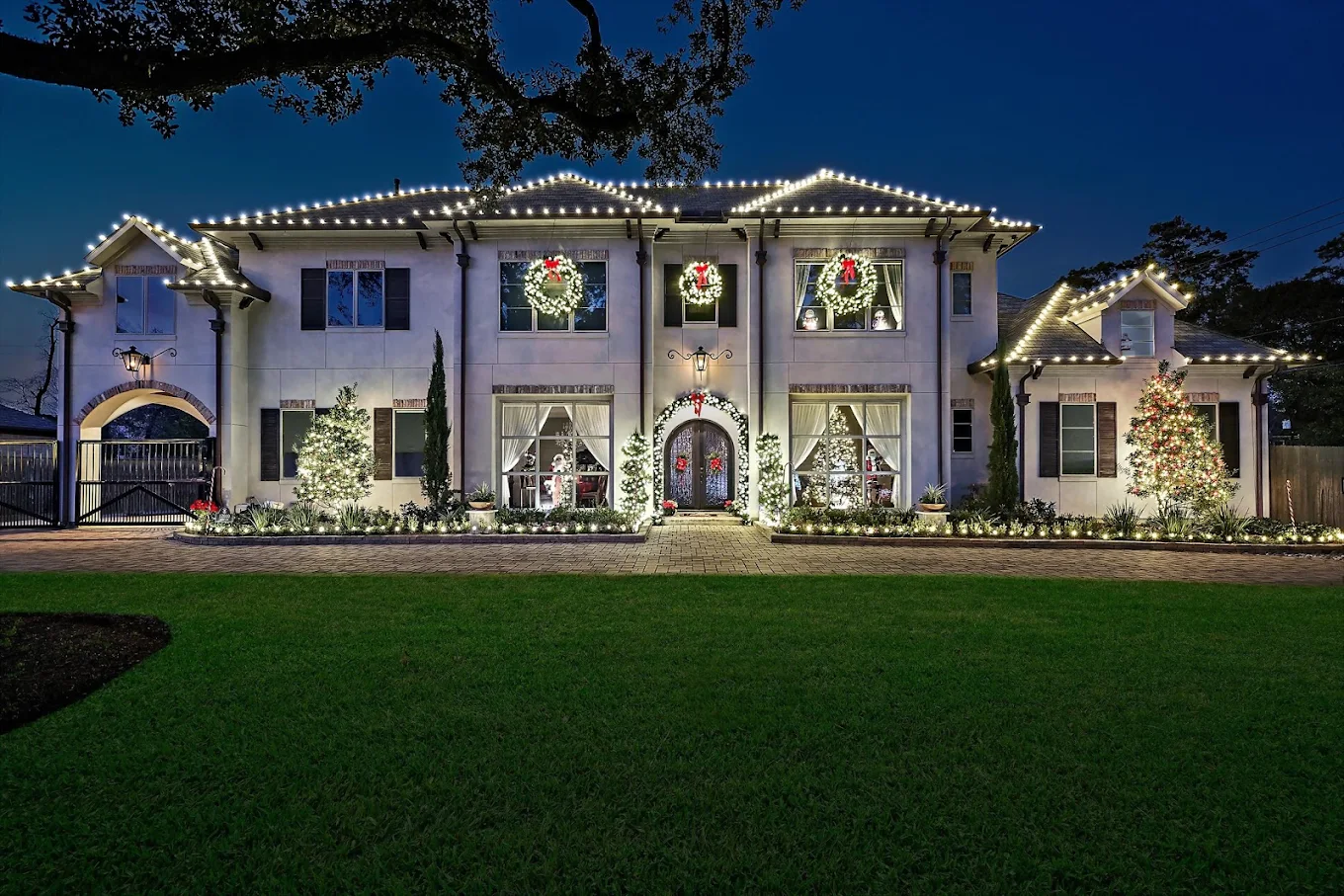
What Makes Hill Country Christmas Light Installations Different
Christmas light installation can require additional planning when a property has a steep roofline, stone or limestone exterior, sloped terrain, or established landscaping around the home. These are all conditions an installer needs to evaluate before deciding how the display will be installed.
Roof pitch and roofing material affect how crews can safely access different areas of the home. Exterior materials affect where lights can be mounted without damaging the surface. Landscaping and terrain can influence where ladders and equipment can be positioned during installation.
The layout of the property matters too. On a larger or more private lot, the parts of the home that are most visible from the street or driveway may be different from those on a more compact property. That can influence which architectural features the lighting design emphasizes.
The important point is that installation planning should start with the property itself. Before choosing how lights will be mounted or where the display should be concentrated, the installer needs to understand the roofline, exterior materials, access, landscaping, and viewing angles.
Working with steep rooflines
A steep roofline can change how a Christmas light installation needs to be planned. Before installation begins, the crew needs to evaluate the roof pitch, height, roofing material, and access points to determine how different areas of the home can be reached.
That assessment can also affect the installation plan itself. A section of roof that is straightforward to access on one home may require a different approach on a taller or more complex property. The goal is to plan access before installation begins rather than figuring it out once the crew is already working on the home.
Steep or complex rooflines can also affect how long an installation takes. The amount of additional time depends on the property, which is why the roofline and access conditions should be evaluated during the consultation rather than estimated from the home’s size alone.
Mounting Christmas Lights on Stone and Limestone
Stone and limestone exteriors require a different installation plan than surfaces that provide obvious mounting points. The first step is identifying what materials are actually present on the home and where lights can be attached without unnecessarily altering the exterior.
That matters because not every part of a stone exterior should be treated the same way. The type of masonry, how it was installed, the surrounding trim, and the location of nearby gutters or fascia can all affect the mounting options available to the crew. What works on one Hill Country home may not be appropriate on another, even when both appear to have similar stone exteriors from the street.
During the consultation, the installer should look at where the lighting design needs to go and what compatible mounting surfaces are available in those areas. In some cases, the best mounting point may be associated with another part of the home’s exterior rather than the stone itself. Gutters, fascia, trim, roof edges, and other architectural features can all factor into the installation plan depending on the property and the lighting design.
The goal is not simply to find somewhere a clip will fit. The mounting plan should support the intended design while taking the home’s exterior materials into account. That’s particularly important on properties where stone or limestone is a prominent architectural feature and homeowners want the lighting to highlight those lines without leaving unnecessary changes behind after the display comes down.
This is one reason the installation plan should be established during the property walkthrough. A designer can determine where the display should visually sit on the home, while the installation team can account for the surfaces and access points available in those areas. If the preferred design calls for lighting in an area without an appropriate mounting point, the plan may need to adapt rather than forcing the original concept onto a surface that isn’t suited for it.
Protecting Established Landscaping During Installation
Christmas lighting installation doesn’t happen only on the roof. Crews also need space around the home to position ladders, move equipment, reach trees and architectural features, and access the areas included in the design. On a property with established landscaping or sloped terrain, planning those access points before installation begins becomes especially important.
Trees, planting beds, native grasses, shrubs, and other established landscaping can affect where equipment can be positioned and how crews move around the property. Rather than treating those features as obstacles once installation is underway, they should be part of the plan from the beginning.
Mature trees can require particular attention. If trees are part of the lighting design, the crew needs to consider both how the lights will be installed and how the surrounding area can be accessed. If they aren’t being lit, their placement can still affect ladder access or the route crews use to reach the roofline and other parts of the home.
Planting beds can create similar considerations. The most direct route to an installation point isn’t necessarily the best route if it requires repeatedly moving equipment through established landscaping. Identifying access paths during the property walkthrough gives the crew a chance to plan around those areas before installation day.
Irrigation is another property feature worth identifying ahead of time. Sprinkler heads, drip irrigation, and other components around planting beds may not be obvious from the surface, so homeowners should point out any known irrigation features or particularly sensitive areas during the consultation.
For Hill Country properties, the larger takeaway is that landscaping and terrain should be considered alongside the roofline and exterior materials. A professional installation plan accounts for how the crew will move around the property, not just where the lights will eventually appear.
What to Point Out During Your Christmas Lighting Consultation
Homeowners don’t need to prepare an installation plan themselves, but the property walkthrough is a good time to point out anything the crew may not be able to identify just by looking at the home. That can include irrigation components, especially delicate landscaping, areas where equipment access is limited, gates or pathways that affect how crews reach the property, and trees or architectural features the homeowner does or doesn’t want included in the display.
Sharing those details early gives the design and installation teams more information to work with before the installation is scheduled.
What Austin homeowners can expect from the process
The process starts with a design consultation at the property. For a Hill Country home, that walkthrough isn’t only about deciding where the lights should go. It gives The Perfect Light’s team a chance to look at the roofline, exterior materials, landscaping, terrain, access points, and the parts of the property the homeowner wants the display to emphasize.
That’s where many of the installation decisions covered above begin. A steep roofline may affect how certain areas can be accessed. Stone or limestone can influence the available mounting points. Established landscaping, slopes, gates, or other property features can affect how the crew reaches different parts of the home. Identifying those conditions during the consultation gives the team an opportunity to account for them before installation day.
The design conversation matters just as much. Homeowners can talk through the overall look they want, which parts of the home they want to highlight, and how they expect to see the display most often. On a property set farther back from the road, for example, the most important viewing angle may be from the driveway or approach to the home rather than directly from the street. The installation plan and the visual design should work together.
Once the design and property conditions have been evaluated, the installation can be planned around the home rather than figured out as the crew goes. The Perfect Light brings more than 25 years of professional lighting experience to that process, while the Austin and Hill Country installation itself should still be evaluated based on the conditions of the individual property.
After installation, The Perfect Light’s Christmas lighting program also includes in-season service. If lighting needs attention during the season, the company aims to make a service visit within 48 hours. That ongoing service matters on a professionally installed display because the relationship doesn’t end once the lights are installed. For more on what the program includes, see what a full-service Christmas lighting program includes.
At the end of the season, takedown is also part of the program, so homeowners aren’t responsible for removing the display themselves.
If your home has a steep or complex roofline, stone or limestone exterior, established landscaping, sloped terrain, or other features that could affect installation, the property walkthrough is the place to plan for it.
Schedule a Hill Country Christmas lighting consultation
Or learn more about Christmas and outdoor lighting in the Austin area.
Frequently asked questions
Can Christmas lights be installed on a stone or limestone exterior?
Yes. A stone or limestone exterior doesn’t prevent a home from having professionally installed Christmas lights, but it can affect the mounting plan. The installer first needs to evaluate the masonry and the surrounding architectural features to determine what mounting surfaces are available. Depending on the home, the installation plan may use nearby gutters, fascia, trim, roof edges, or another compatible surface rather than treating the stone itself as the default mounting point. The exact approach depends on the home’s construction and should be determined during the property walkthrough.
Does a steep roof change the Christmas light installation process?
Yes. A steep, tall, or difficult-to-access roofline can require more planning than a more accessible roof. The installation team needs to evaluate the roof pitch, height, roofing material, and available access before determining how the lighting can be installed. Those conditions are considered during the property walkthrough so the installation plan reflects the home itself.
Will Christmas light installation damage my landscaping?
Established landscaping should be considered as part of the installation plan before work begins. During the property walkthrough, the team can identify planting beds, mature trees, irrigation components, slopes, and other areas that may affect how crews access the home. Homeowners should also point out particularly sensitive landscaping, irrigation features, or areas where equipment access is limited. That gives the installation team more information to work with when planning how crews and equipment will move around the property.
How far in advance should I book Christmas light installation in Austin?
Booking earlier in the season generally gives homeowners more flexibility when choosing an installation timeframe. Properties with more complex rooflines, access conditions, or installation requirements may also benefit from allowing additional time for the design and planning process. The Perfect Light can provide current scheduling availability during the consultation. For general timing, see when to book Christmas light installation.
Does The Perfect Light install Christmas lights outside Austin?
The Perfect Light serves Austin and surrounding Hill Country areas. Service availability can vary by address, so homeowners outside Austin should confirm that their property is within the current service area when scheduling a consultation.
What happens if there’s no good mounting point on a stone exterior?
If the preferred area doesn’t provide an appropriate mounting point, the installation plan may need to use another compatible part of the home’s exterior or adjust where that portion of the display is placed. The goal is to find an approach that works with the home’s construction rather than forcing the original design onto a surface that isn’t suited for it. This is one reason stone and limestone exteriors should be evaluated during the property walkthrough before the installation plan is finalized.